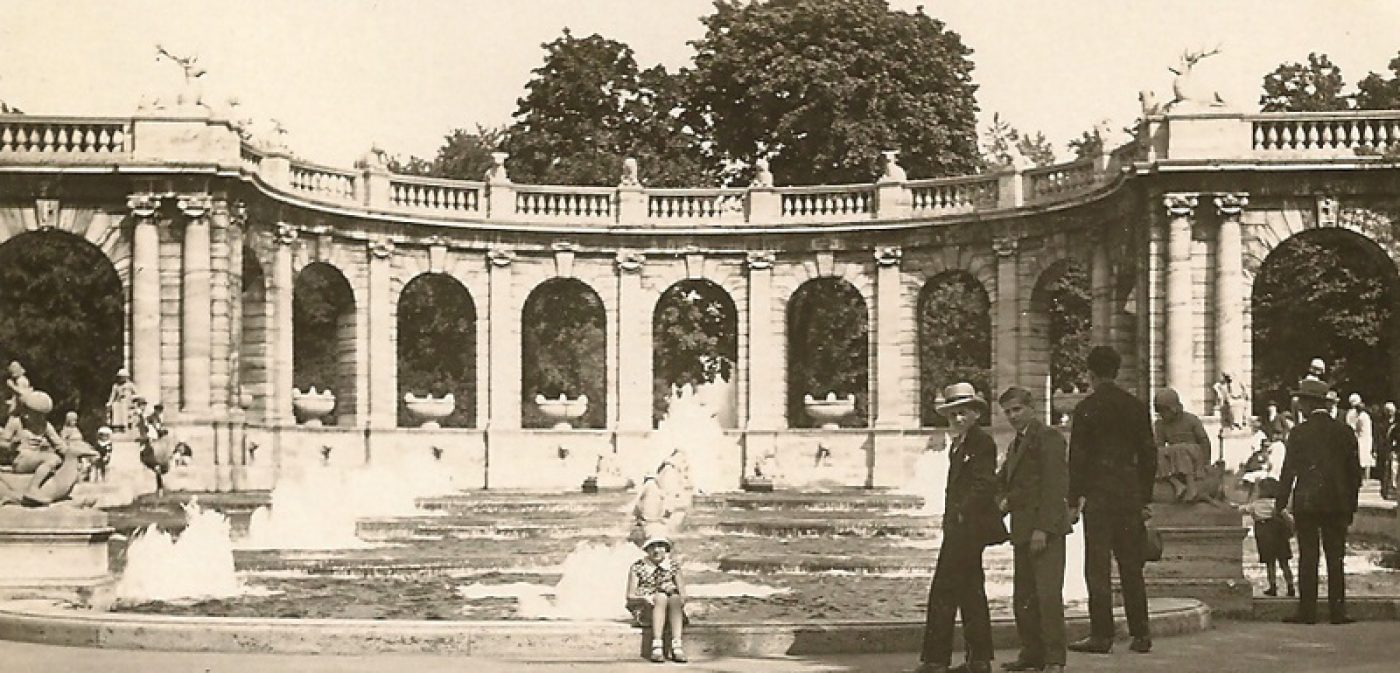
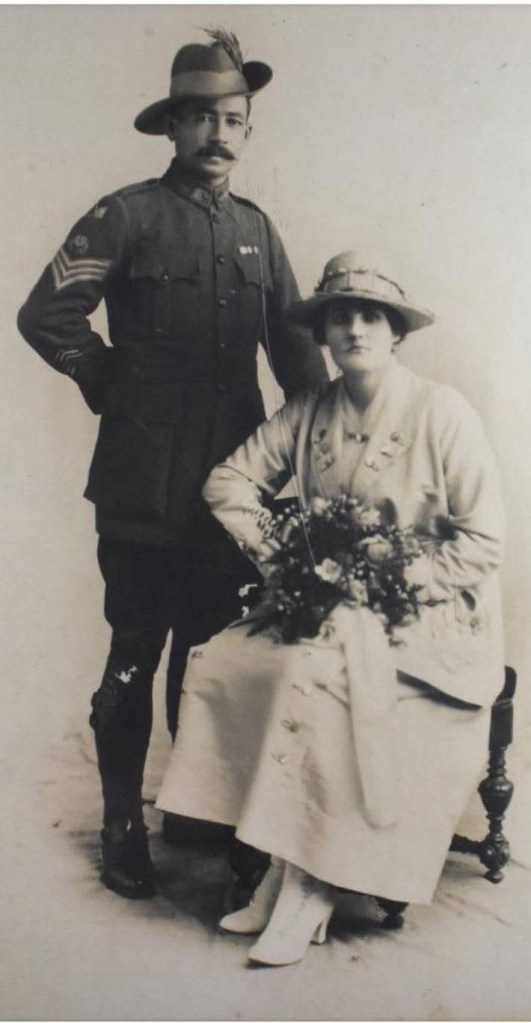
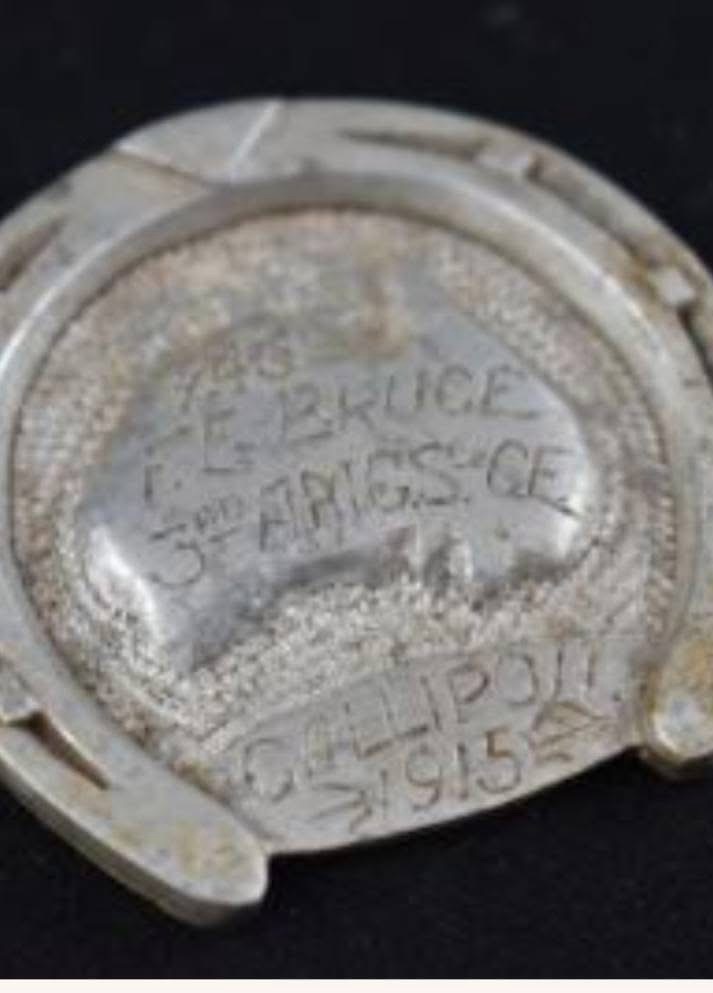
My great uncle Sargent Frederick Ernest Bruce 243 who served in the 10th lighthorse and then 3rd Aust Machine Gun Squadron at Gallipoli and Palestine.
He is pictured here with his wife, whom he married when he returned to Australia in 1919, on a postcard along with his personalised trench art pendant. Other personal items are also on display at the Princess Royal Fortress Military Museum in Albany WA.
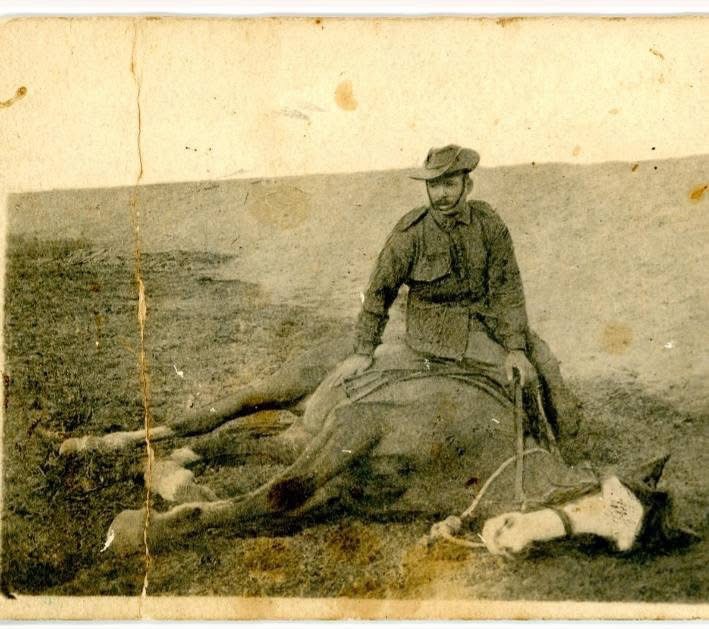
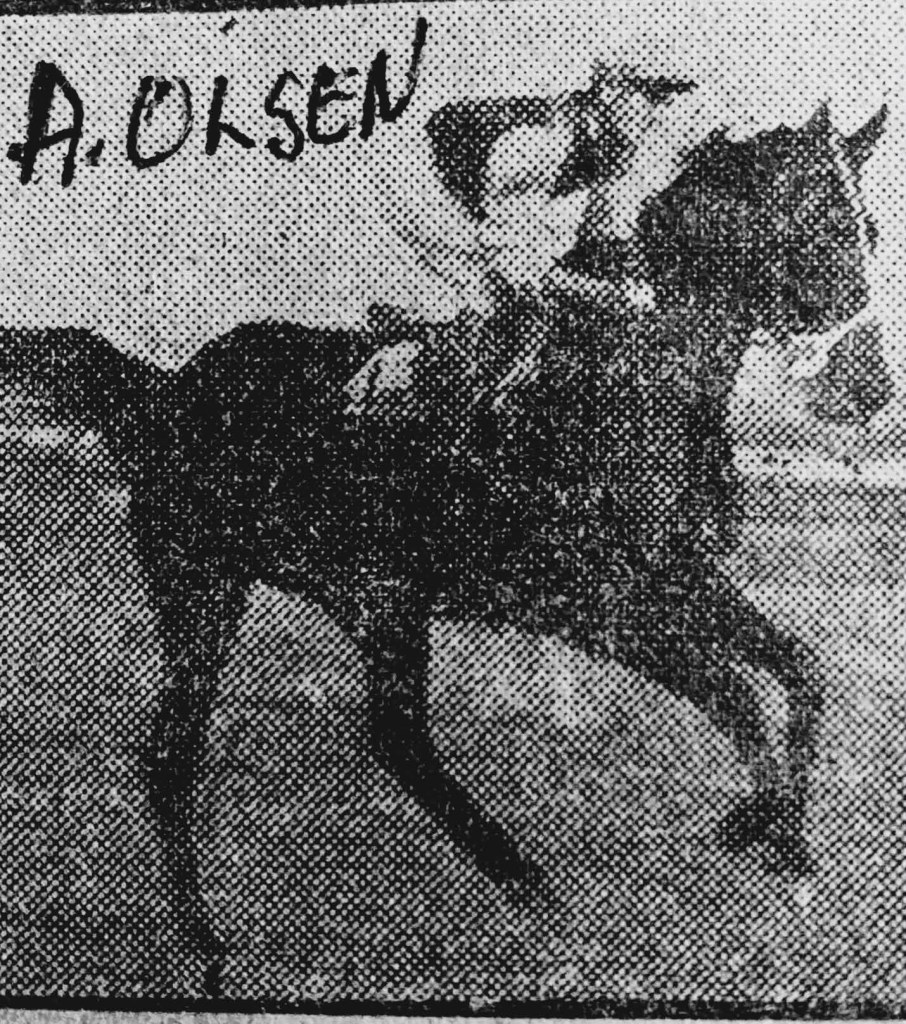
This is my Dad Arthur Olsen who served in the Battle of Britain and later as a Rat of Tobruk in WW2. After he signed up at Greens Patch in WA in 1939. He did an apprenticeship as a Jockey in the 1930s. Born on August 26 1919 in Meekatharra WA, he died on April 26 2019.
He always maintained an interest in horse racing. He was one of the four last remaining Rats of Tobruk when he passed away.
In the horse race he is wearing the brown and pink.
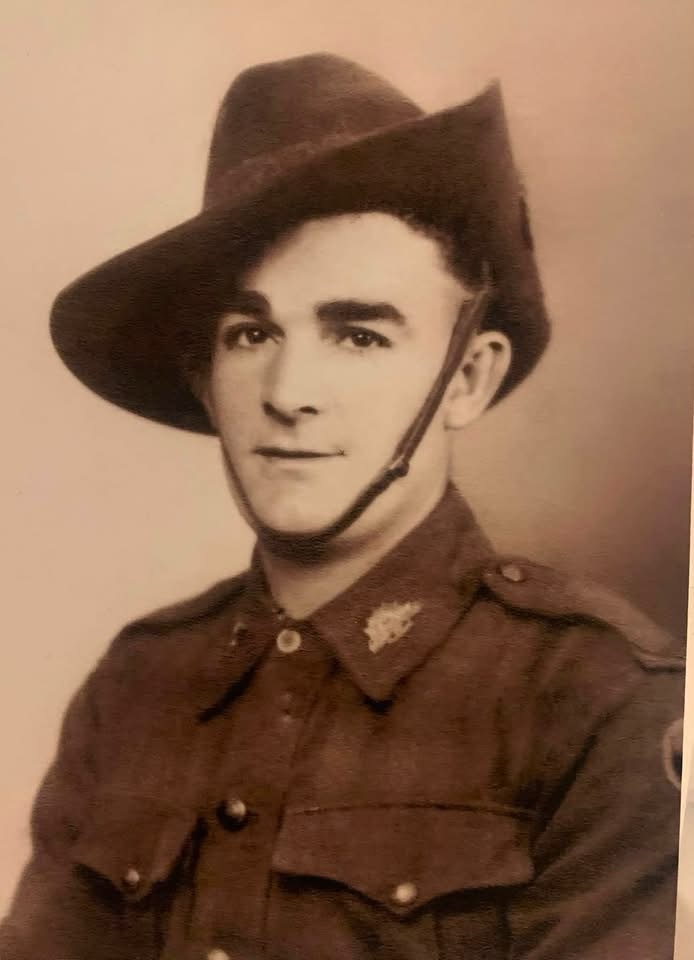
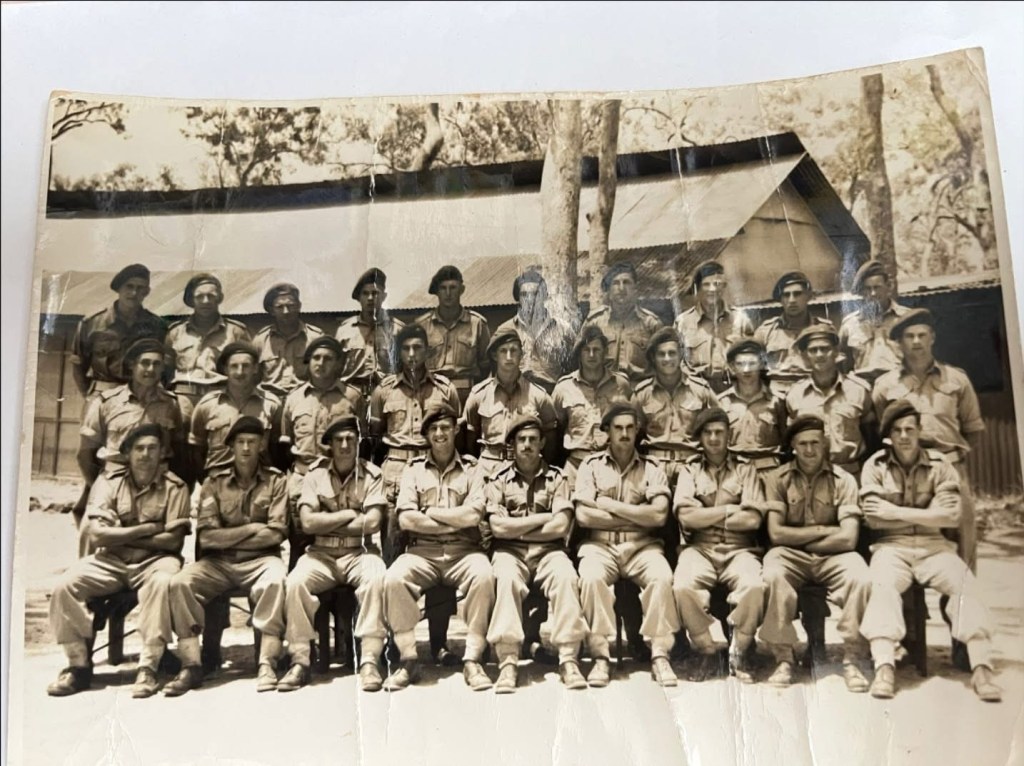
We need your help! We have received a donation and amongst it was an envelope labeled “End of world war 2 photos” containing lots of photos. Some are labelled Mareeba Queensland and one has “ A Coy” on the back. We would love to re-unite the photos with the owner. If any of the names ring a bell or you recognise anyone in the photo, please let us know. Let’s see if the internet can be used for good 😀
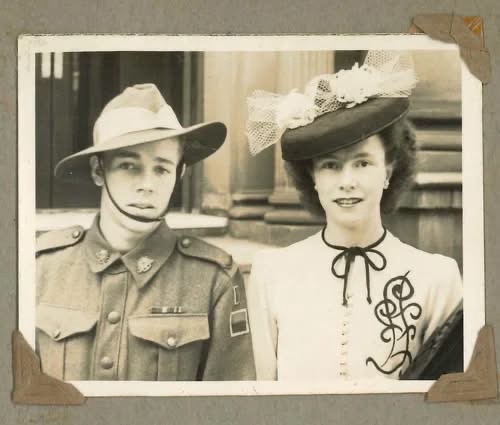
The Family of Reg Chard OAM have informed us today that the funeral will be a private family gathering ..This service will be via invitation only and not open to any member of the public however there will be a service for members of the public to attend in Early September Details Below
PUBLIC MEMORIAL SERVICE FOR REG CHARD
A public Memorial Service will be held on Thursday the 3rd of September at the Kokoda Track Memorial Walkway, Concord Sydney ..It will begin at 1030am
Financial Members and descendants of the 55/53 Battalion who wish to attend can you please inbox or contact any of the Committee to Register so we have an idea of numbers by August 26
Lest We Forget
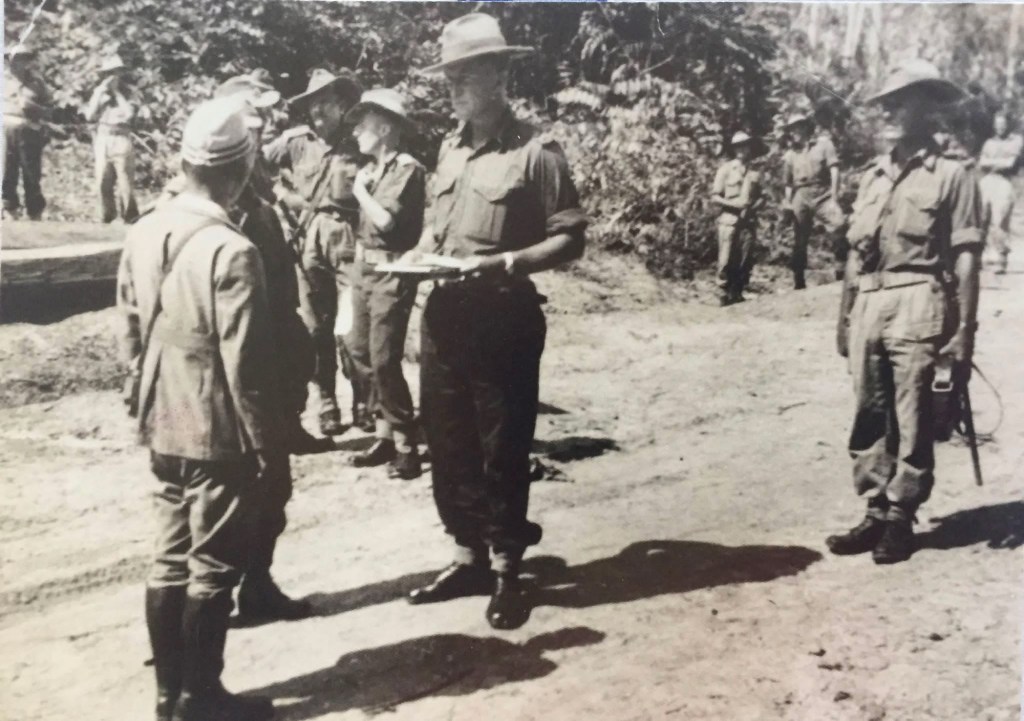
This photo is of the surrender of the Japanese at Balikpapan on 7th September, 1945.
2/7 Cavalry Commando Regiment CO, Lt Col Fahey with regimental Adjutant Capt R V Couché (my dad and holding the sword) accepting the surrender from Japanese naval captain Koreda.
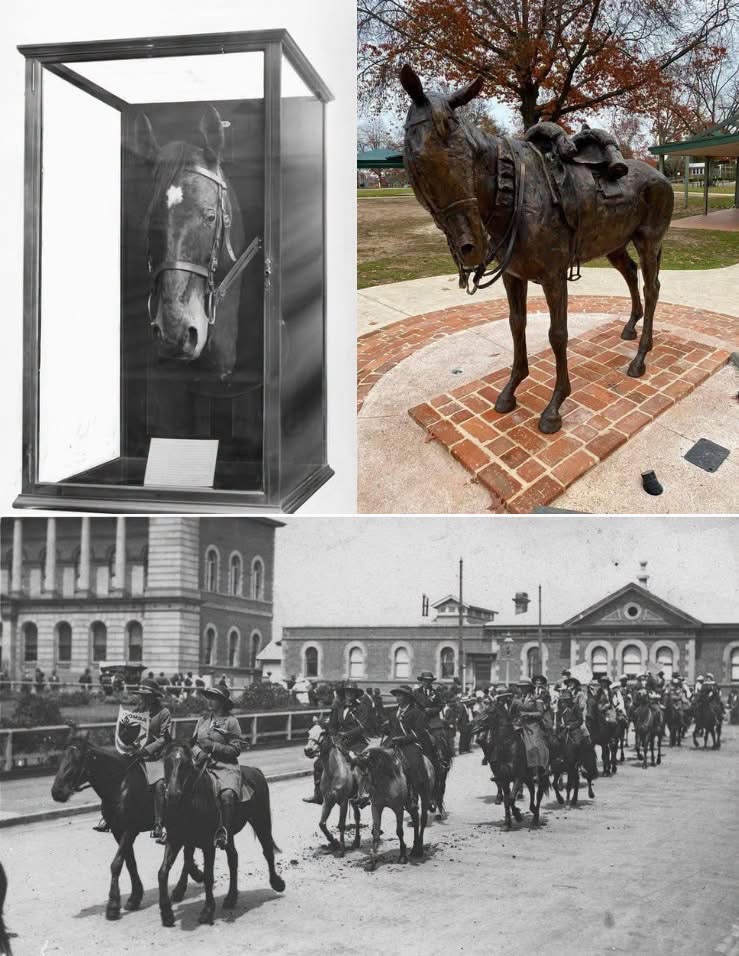
Sandy – THE ONLY AUSTRALIAN WAR HORSE OUT OF 136,000 TO COME HOME FROM WORLD WAR I
During the First World War, more than 136,000 Australian horses, known as Walers, were shipped overseas to serve with the Australian Imperial Force and other Allied forces. Because of Australia’s strict quarantine laws, the risk of disease, and the enormous cost of transport, virtually none were allowed to return home after the war.
The one famous exception was Sandy, the beloved charger of Major General Sir William Throsby Bridges, the founding commander of the Australian Imperial Force.
General Bridges was mortally wounded by a Turkish sniper during the Gallipoli campaign on 15 May 1915 and died three days later while being evacuated to Egypt. Sandy survived and continued serving with veterinary units in Egypt and later France.
In 1917, Australia’s Minister for Defence arranged for Sandy to be brought home as a tribute to the fallen general. After spending time in quarantine in England, Sandy finally returned to Australia in late 1918, becoming the only Australian horse from the approximately 136,000 sent overseas that is known to have come home.
The intention was for Sandy to spend his retirement near General Bridges’ grave at the Royal Military College, Duntroon. However, by then he was elderly, losing his eyesight, and in poor health, so he remained at the Maribyrnong Remount Depot in Victoria. When his condition deteriorated further, he was humanely euthanised in 1923.
His head and neck were preserved for the Australian War Memorial, where they became one of the museum’s most recognised exhibits. A bronze statue of Sandy now also stands at the Royal Military College, Duntroon, honouring both the horse and his lifelong bond with General Bridges.
One interesting detail is that a long-standing story claimed Sandy walked behind General Bridges’ coffin during the general’s funeral procession in Australia. Historians have since shown this could not have happened, as Sandy was still overseas at the time. The legend endured for decades, but the historical records tell a different story.
Sandy’s return made him unique, but he also became a powerful symbol of the 135,999 Australian war horses that never made it home.
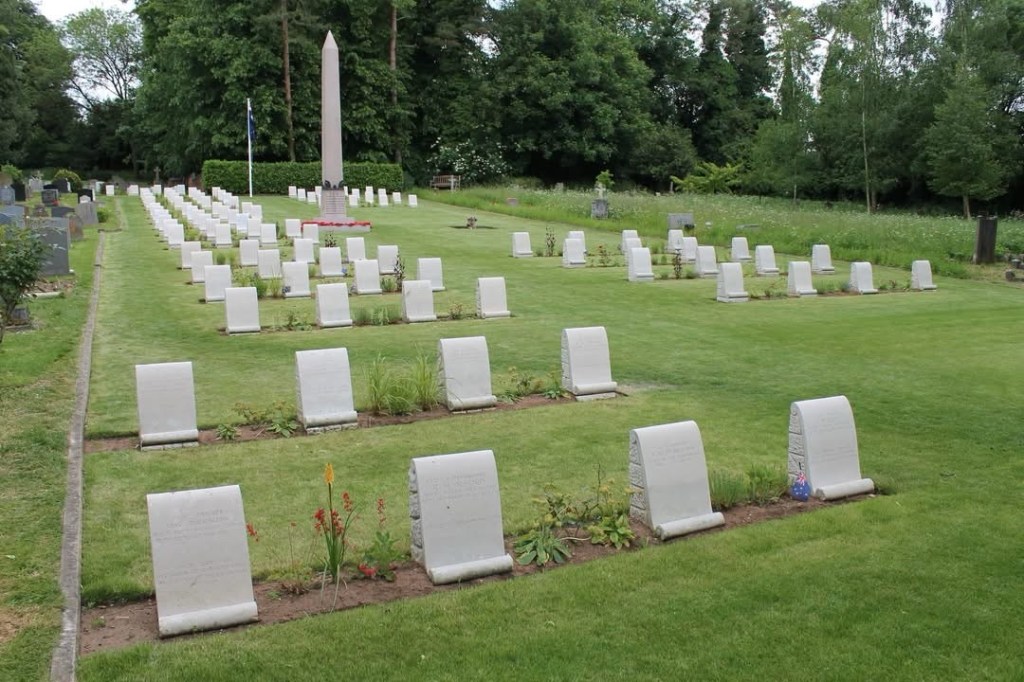
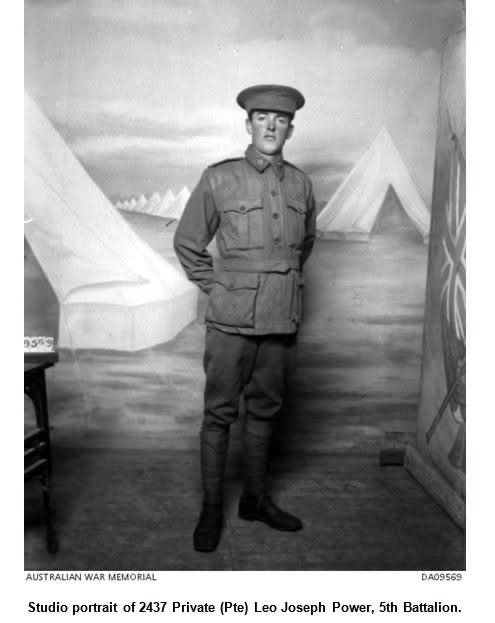
Leo Joseph Power was born at Branxholme, Victoria in 1896 to parents Patrick & Ellen Power (nee Earls).
He enlisted in the Australian Imperial Force (A.I.F.) on 27th April, 1915, aged 18 years & 10 months, single & a Labourer from Branxholme, Victoria.
As Leo Joseph Power was under the age of 21 his parents were required to sign their consent for their son to enlist in the Australian Imperial Force (A.I.F.) for Active Service abroad. Ellen Power wrote & signed the following on 15th April, 1915: “I give my consent to my son Leo Joseph Power to volunteer for the war.”
Private Leo Joseph Power, Service number 2437, embarked from Melbourne, Victoria on HMAT Demosthenes (A64) on 16th July, 1915 with the 5th Infantry Battalion, 7th Reinforcements.
On 18th October, 1915 he embarked from Alexandria on H.T. Borda. He was taken on strength of 5th Battalion at Gallipoli on 18th November, 1915 from 7th Reinforcements.
He was sent to Field Ambulance at Lemnos on 12th December, 1915 & was transferred to Hospital Ship Soudan at Mudros on 26th December, 1915. He disembarked at Malta on the same day & was admitted to St. Patrick’s Hospital with Trench Feet and debility. Private Power was transferred to All Saints Hospital at Malta on 24th January, 1916. He was transferred to Hospital Ship Bornu on 11th February, 1916 – fit for active Service & embarked for Egypt. Private Power disembarked at Alexandria on 17th February, 1916 & was admitted to Overseas Base at Ghezireh on 18th February, 1916 from Malta. He rejoined his Battalion at Serapeum on 11th March, 1916.
On 25th March, 1916 Private Power embarked from Alexandria on Troopship Briton & disembarked at Marseilles, France on 30th March, 1916.
Private Leo Joseph Power was wounded in action in France on 17th (or 18th – illegible) August, 1916. He was admitted to 2nd Field Ambulance on 19th August, 1916 with shrapnel wound/s to Cheek then transferred the same day to 3rd Casualty Clearing Station with G.S.W. (Gunshot wound/s) to Cheek. Private Power was transferred to Ambulance Train 6 & was admitted to No. 26 General Hospital at Etaples, France on 20th August, 1916. He was transferred to No. 6 Convalescent Depot on 29th August, 1916 then transferred to 1 A.D.B. on 31st August, 1916. Private Power proceeded from 1st A.D.B.D. (Australian Divisional Base Depot) on 19th September, 1916 & rejoined 5th Battalion in France on 20th September, 1916.
He reported sick on 3rd October, 1916 & was admitted to 3rd Field Ambulance with Gastro Enteritis. He was transferred & admitted to D.R.S. (Divisional Rest Station) – 1st Field Ambulance on 3rd October, 1916. Private Power was transferred & admitted to 17th Casualty Clearing Station on 3rd October, 1916 then transferred to 28 Ambulance Train on 5th October, 1916. He was admitted to 3rd Canadian Stationary Hospital at Boulogne, France on 6th October, 1916 with Gastritis Enteritis – suspected Dysentry. He was transferred & admitted to 14th Stationary Hospital at Wimmereux on 7th October, 1916 with suspected Enteric Fever. (Another entry on Casualty From – Active Service recorded he was admitted to 14th Stationary Hospital on 13th October, 1916 with “Flexmer Dysentry”.) Private Power embarked for England on 13th October, 1916 from Boulogne, France on Hospital Ship Panama.
On 15th October, 1916 Private Power was admitted to 2nd Western General Hospital, England with Dysentery. He was transferred to Convalescent Hospital at Barton-on-Sea on 16th February, 1917. Private Power was discharged to Furlo from 14th March to 29th March, 1917 & was then to report to Perham Downs.
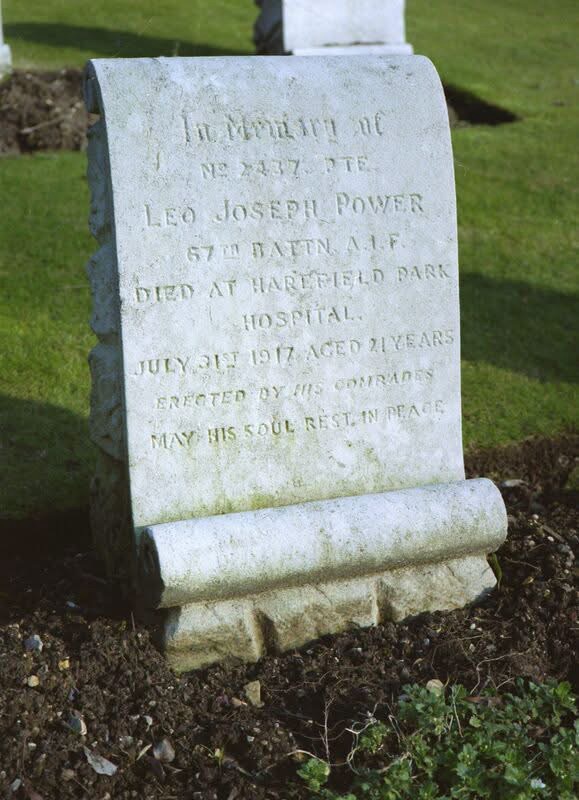
Private Power was discharged to Administrative Headquarters, 130 Horseferry Road, London on 14th March, 1917 to rejoin his Unit – Furlo. He was marched in to No. 1 Command Depot at Perham Downs, Wiltshire on 30th March, 1917 from Furlo & medically classified as B1A (fit for overseas training camp in a few weeks).
He was transferred to 67th Battalion on 28th April, 1917 & was marched out to Windmill Hill Camp at Perham Downs, Wiltshire on the same day.
On 25th June, 1917 Private Power reported sick & was admitted to Base Hospital at Windmill Hill. He was transferred to Military Hospital Tidworth, Wiltshire on the same day – cause N.Y.D. (Not yet determined). Private Power was diagnosed with an enlarged Liver on 27th June, 1917 & was reported to be seriously ill. He was transferred to 1st Australian Auxiliary Hospital at Harefield, Middlesex on 9th July, 1917 (Purport card recorded Sarcoma of Liver).
Private Leo Joseph Power died at 7.10 am on 31st July, 1917 at 1st Australian Auxiliary Hospital, Harefield Park, Harefield, Middlesex, England from Pericarditis.
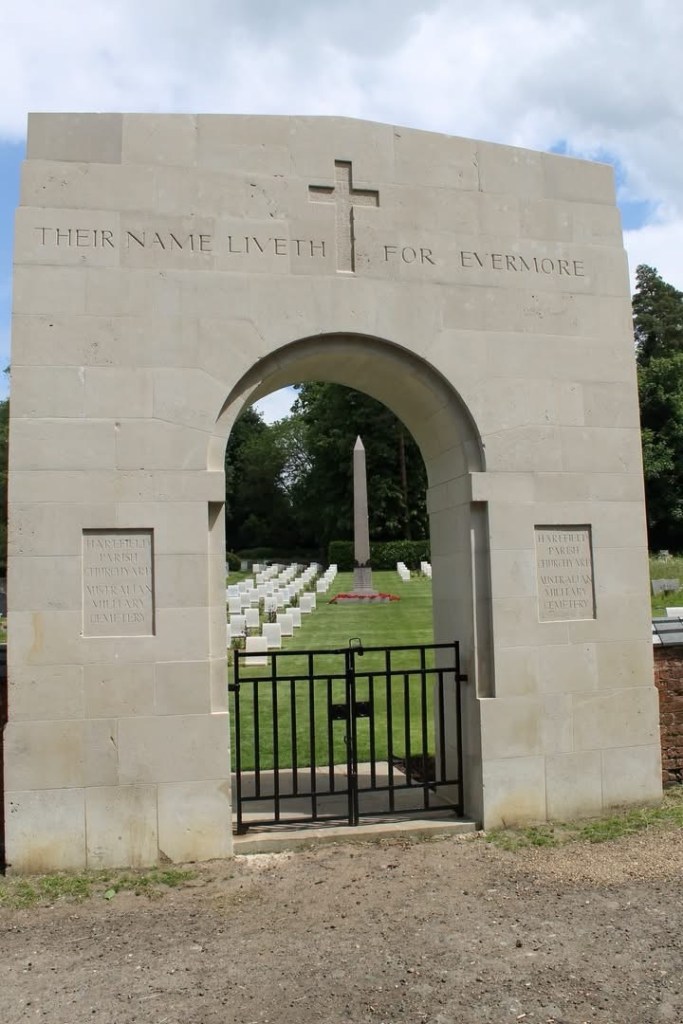
He was buried in St. Mary the Virgin Churchyard, Harefield, Middlesex, England where 112 other WW1 Australian War Graves are locatrd
 Rootsandrevolations
You must be logged in to post a comment.