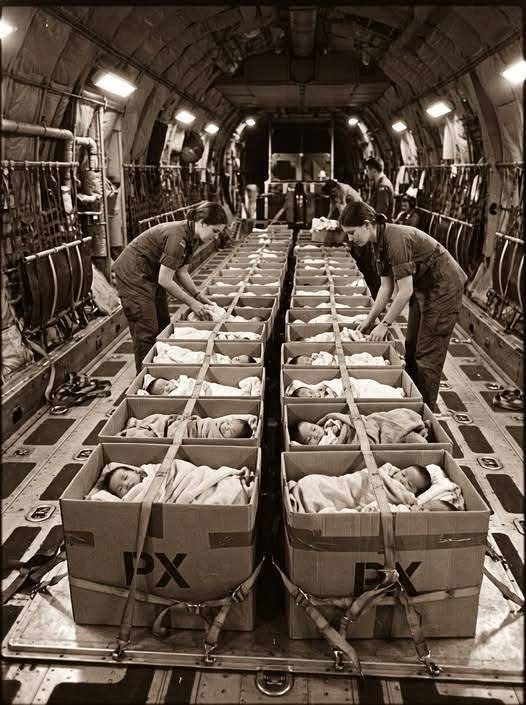
The plane was literally full of babies in cardboard boxes. And then the door exploded.
April 1975, Saigon was falling. North Vietnamese tanks were 10 miles away. US President Gerald Ford ordered Operation Babylift – fly 3,300 Vietnamese orphans to America.
The first flight was a giant C-5A Galaxy, the biggest plane in the world. On board were 314 people – 243 babies and children, many under 1 year old, sick, malnourished. They had no cribs. Nurses put them in cardboard boxes from the base exchange and strapped the boxes to the floor with cargo nets. Each box had 2-3 babies.
12 minutes after takeoff from Tan Son Nhut, at 23,000 feet, the rear cargo door blew off. Explosive decompression. The plane filled with fog. 2 flight attendants and 78 babies in the back were sucked out and died instantly.
The pilot, Captain Bud Traynor, wrestled the crippled plane. He couldn’t go back to Saigon – too dangerous. He crash-landed in a rice paddy. The plane broke into 4 pieces. 138 died total. 176 survived, including 149 babies found alive in the wreckage, still strapped in their boxes.
The photo you see is from a SECOND successful Babylift flight a day later. Those boxes are real. Those nurses volunteered to fly into a war zone knowing the last plane crashed. Many of those babies grew up in America and only 30 years later learned they survived a plane crash that killed their friends.
One survivor, Aryn Lockhart, was 2 months old in a box on that crash. Today she is a mother in Ohio.
🔥 They were placed in cardboard boxes and sent into the sky as war consumed Saigon… What happened after the plane went down will leave you speechless.
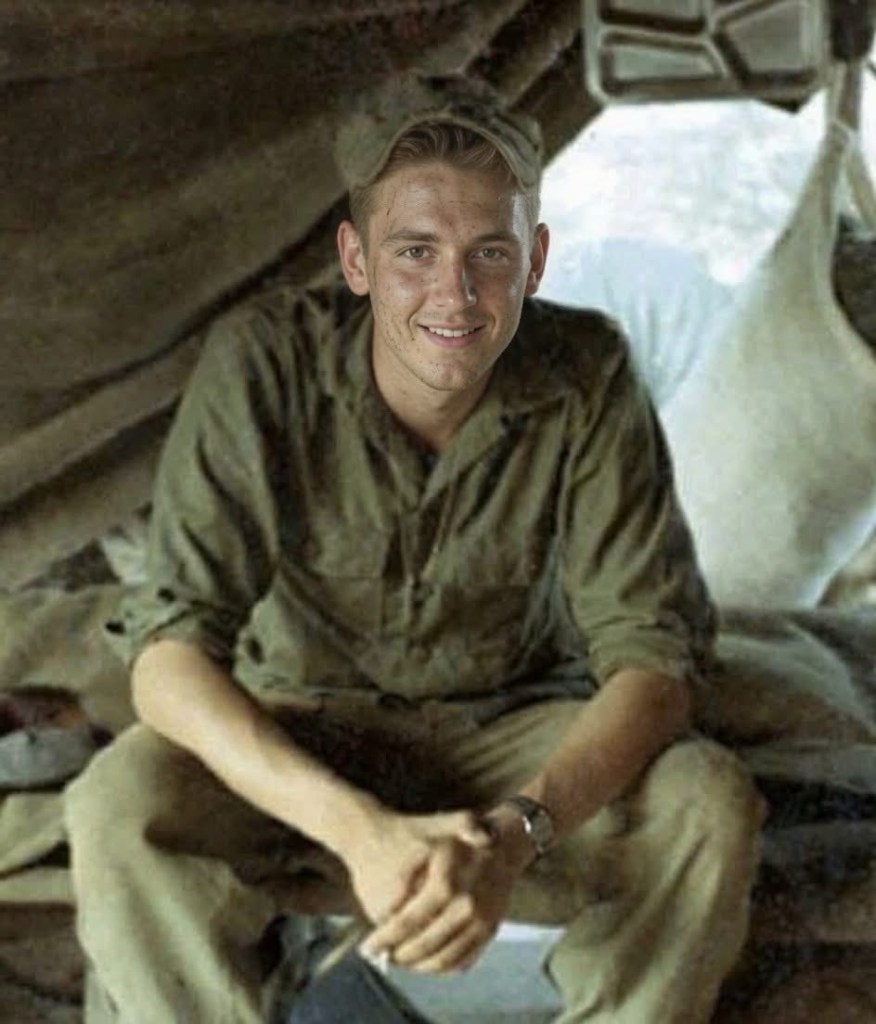
Lest We Forget…
US Marine Lance Corporal Rick Deeds was Killed In Action in Vietnam on January 20, 1968.
“Ricky and I were members of 3rd platoon, Bravo Co, 1st Amtrak Bn at Cua Viet. He received his 1st Purple Heart after being shot by a sniper in the leg during Operation Hickory in the DMZ and transferred to the Hospital ship Sanctuary. He was then transferred to Alpha Co 1st Amtrak Bn where he was mortally wounded during an ambush near the cemetery outside My Loc just north of the Cua Viet River. Ricky you are not forgotten.”
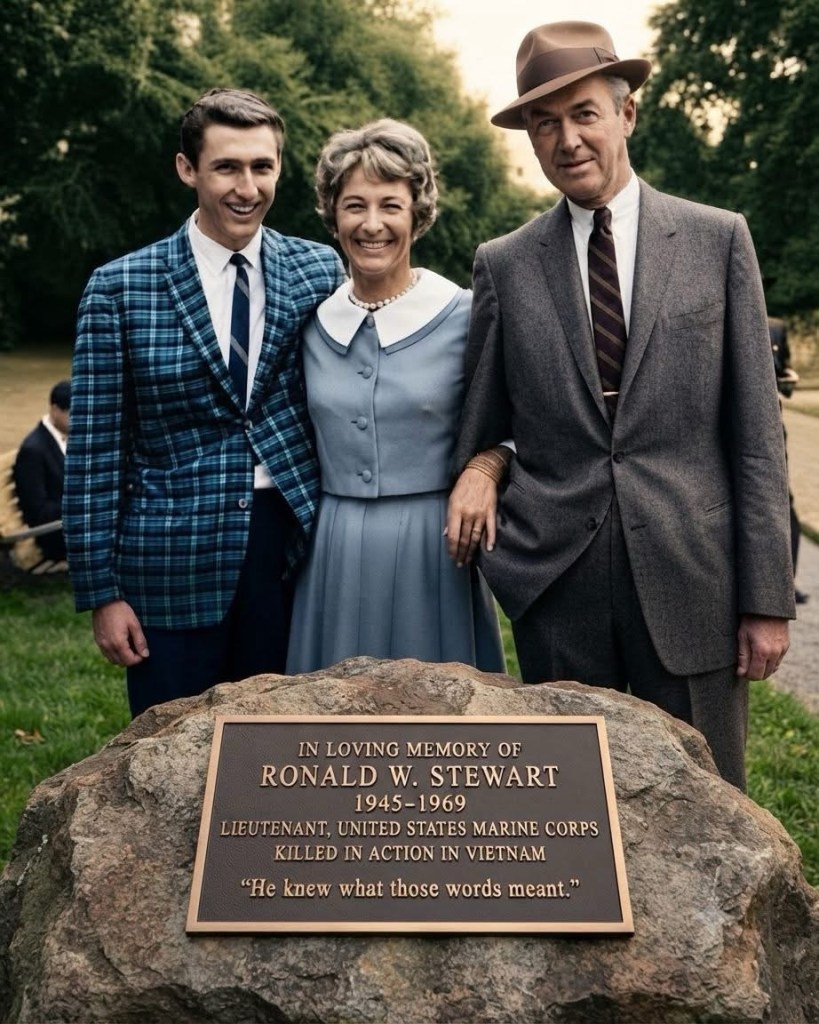
The ultimate sacrifice carries a weight that only those who have walked the path of service can truly understand.
In 1969, legendary actor and decorated World War II combat veteran James Stewart faced the most agonizing moment a parent could ever know. When the telephone call arrived, it brought the devastating news that his 24-year-old son, Marine Corps Lieutenant Ronald McLean Stewart, had been killed in action in Vietnam.
Having flown heavy combat missions himself as a bomber pilot in WWII, Stewart knew the grim reality behind those words before the sentence was even finished. Behind the Hollywood stardom and the iconic screen presence was a grieving father who understood the brutal cost of war intimately.
We remember Ronald W. Stewart and honor the profound sacrifice of the families who bear the heaviest burdens of history. Rest in peace.
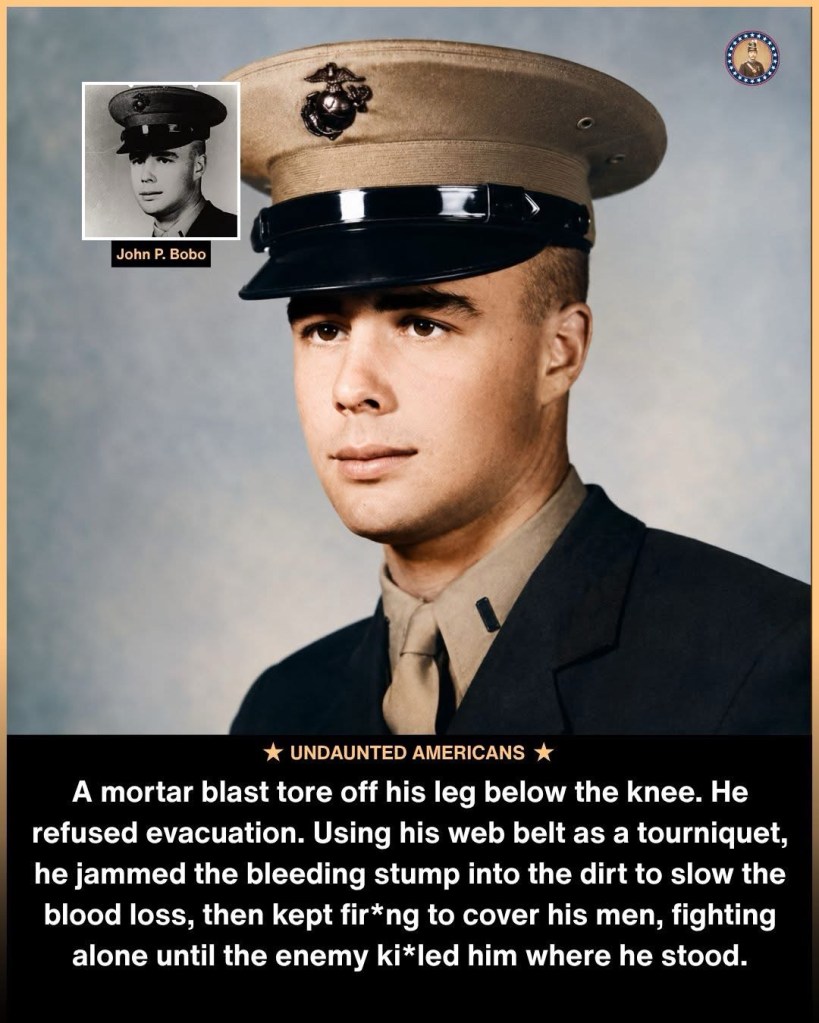
John P. Bobo was a 24-year-old Marine second lieutenant from Niagara Falls, New York, leading a weapons platoon in Vietnam’s Quang Tri Province. On March 30, 1967, his company was setting up a night ambush near Con Thien when a reinforced North Vietnamese force slammed into them with machine guns and mortars.
Bobo moved through the chaos, organizing a defense and steadying his outnumbered Marines. He grabbed a rocket launcher from among the wounded and turned it on an enemy machine g*n nest.
Then a mortar round tore off his right leg below the knee.
He refused to be evacuated. Instead, he demanded to be placed in a fiing position so he could cover his command group’s retreat. He tied his own web belt around his leg as a tourniquet, drove the stump into the dirt to slow the bleeding, and kept fiing.
He held that ground until he was kil*ed, buying his men the time they needed to reach safety. His stand saved the rest of his command.
For his sacrifice, John P. Bobo received the Medal of Honor.
Image credit: Wikipedia
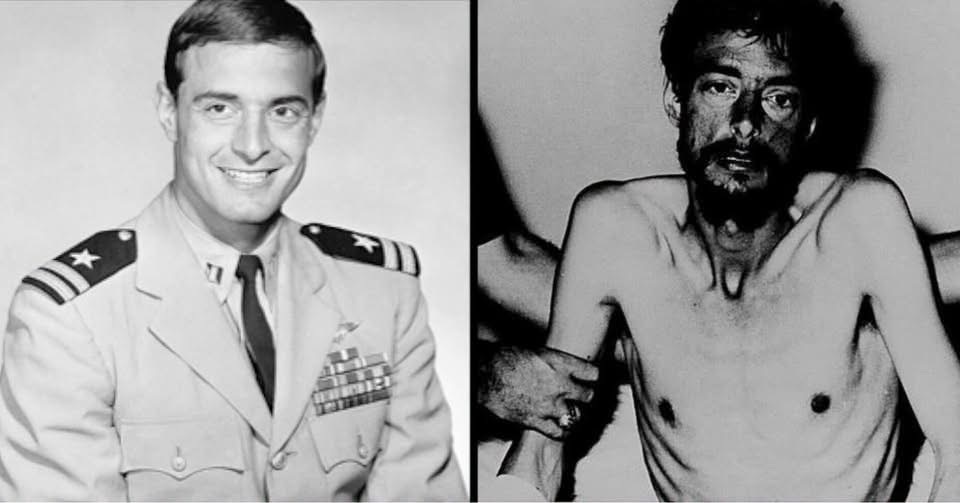
Not all service sacrifices are served equally.
July 27, 1966 – Navy pilot LTJG Dieter Dengler of Pacifica, Calif., the first downed American airman to break out of captivity in Southeast Asia and reach safety, was reunited with family this week following a grueling 23-day jungle ordeal.
A disoriented and starving Dengler (pictured before captivity and after his rescue), suffering from cut and bleeding feet after navigating dense swamps and brush, grasped the legs of his U.S. Air Force rescuer and muttered: “Thank God!”
Specifics regarding the 28-year-old flyer’s unprecedented flight to freedom were revealed today by UPI. Dengler reached California Tuesday before being transferred to Balboa Naval Hospital in San Diego for medical care and debriefing.
Dengler, who piloted a propeller-driven A-1 Skyraider, was downed on Feb. 1. Following five months of confinement and torture in a remote detention camp, Dengler and a fellow officer succeeded in breaking out this June.
Moving primarily at night and concealing themselves in dense jungle during daylight hours, the pair headed south. Driven by extreme hunger, the men entered a remote settlement in search of food and were ambushed, where Dengler witnessed his companion beheaded with a machete. Dengler narrowly escaped into the brush and continued alone through the wilderness, evading pursuers until his rescue.
Twenty-three days after the breakout, an Air Force pilot spotted an individual in black pajamas signaling with a dirty white cloth from the jungle undergrowth.
Lt. Col. Eugene Deatrick, who commands the 22nd Air Commando Squadron based at Pleiku, said afterward, “I went by so quickly I wasn’t sure what it was — perhaps a villager waving as we went by.”
He circled back for a second look and discovered an arrangement of stones in an open area forming a crude “SOS,” subsequently transmitting instructions for an immediate rescue operation.
Dengler emigrated to the U.S. in 1956, when he was 18, with the intention of becoming a pilot. He spent a WEEK HOMELESS in Manhattan before finding an Air Force recruiter. He enlisted in June 1957 and attended basic training at Lackland AFB in San Antonio. (He later became a Naval aviator.)
Dieter Dengler (May 22, 1938 – February 7, 2001) was a German-born United States Navy aviator who was shot down over LAOS and captured during the Vietnam War. After SIX MONTHS of imprisonment and torture, and 23 days on the run, he became only the second captured US airman to escape during the war. Of the seven prisoners of war who escaped together from the Pathet Lao prison camp in Laos, only he and Thai citizen Phisit Intharathat survived. After the war, he worked as a test pilot for private aircraft and as a commercial airline pilot.
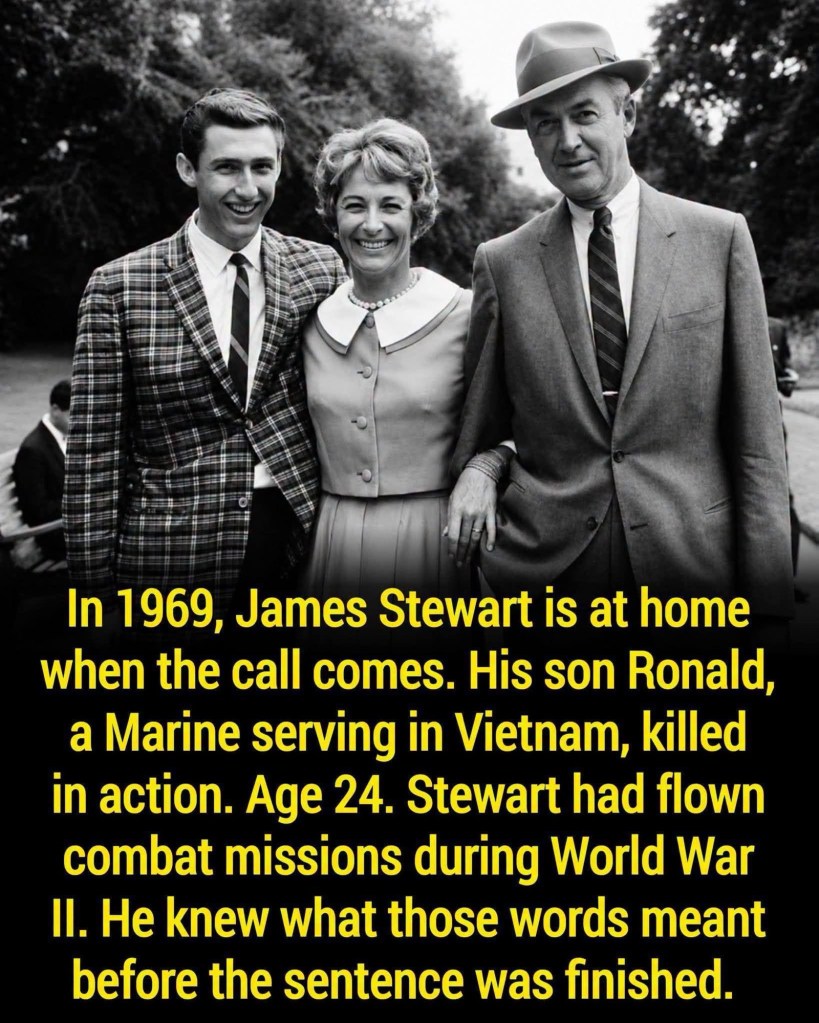
Ronald McLean, Stewart’s stepson, served as a 1st Lieutenant in the U.S. Marine Corps and was killed in action on June 8, 1969, during a reconnaissance patrol in the Vietnam War.
He had been in the reconnaissance unit for only a few weeks and participated in a highly dangerous mission near the DMZ in Quang Tri Province.
McLean displayed extraordinary bravery, exposing himself to enemy fire to protect his team and provide medical aid to a wounded comrade, ultimately being mortally wounded.
For his heroism, he was posthumously awarded the Silver Star.
In 1969, James Stewart was at home when the call came. His son Ronald, a Marine serving in Vietnam had been killed in action. Age 24. James Stewart had flown combat missions during World War II.
He knew what those words meant before the sentence was finished. But James didn’t retreat from the public eye.
He kept his commitments. Smiled for cameras. Gave interviews. Promoted his films. Few people watching knew he had just buried his son. Privately, it’s different. He kept Ronald’s photos on his desk for the rest of his life and wore his ring every single day until he died. “The war changed me,” he once said. “It took my boy.” Some grief is carried quietly. For James Stewart, it stayed with him until the end.
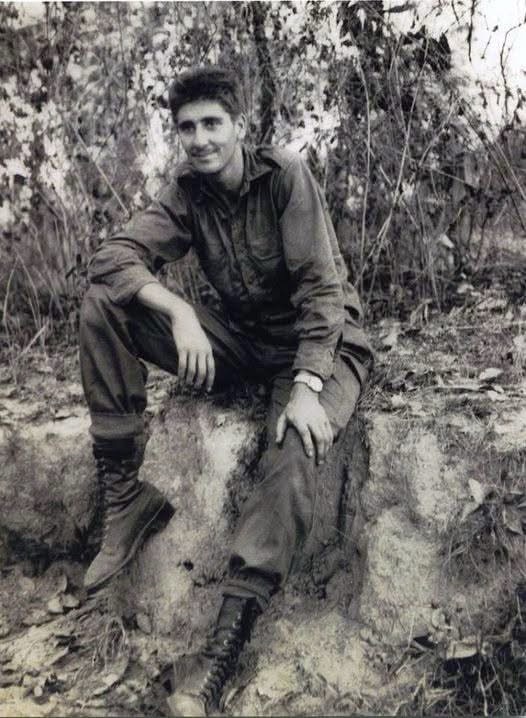
Corporal Donald “Lofty” Aylett was born in Mooroopna, Victoria on 10 May 1945. In Vietnam he served with 1RAR and 7RAR until 6 August 1967, when Corporal Aylett was shot leading his section into action during the Battle of Suoi Chau Pha. He was 22 years old. Donald was returned to Australia and buried at Tatura with full military honours. He was commemorated there by his family and community at the state-wide Gravesite Vigils for Victorians killed in Vietnam, on 21 February 2016. Lest we forget.
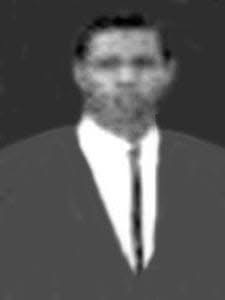
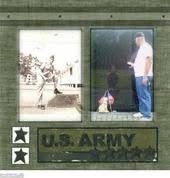
Rhoda Fullington McCall • Mar 9, 2014 • ®
My brother Larry Fullington at Ft.
Benning, Ga. 1968-The Wall (finally) 2009
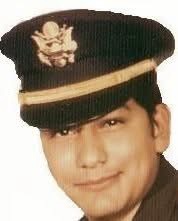
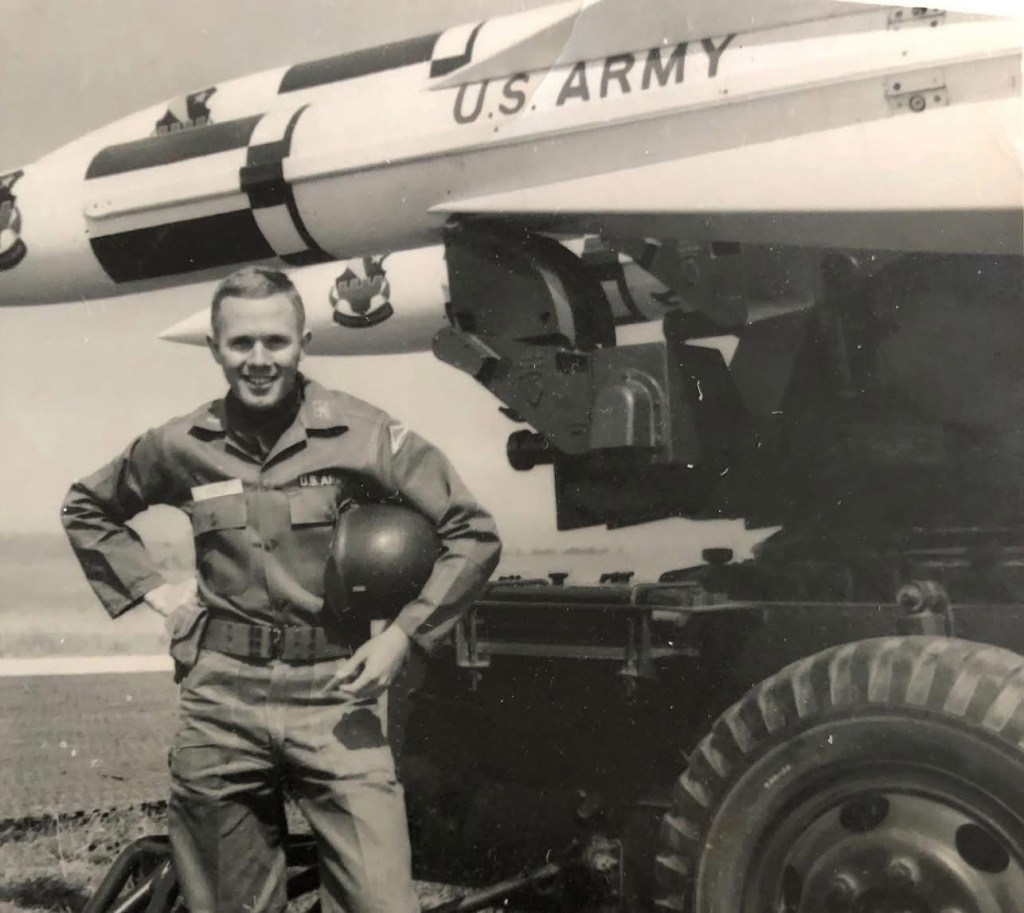
“Forrest!” barked the officer on the phone at Battalion Headquarters, “When is your radar going to be up?” Dave Forrest was in charge of a Hawk Missile Battery in November 1994, protecting a sector of the German Czech border near Grafenwohr. His radar was down, and his warrant officer was frantically trying to fix it. “Soon…,” Forest yelled back. “This is one heck of a responsibility for a 24-year-old lieutenant,” he muttered to himself. But this was the Cold War in action. Dave was a Distinguished Military Graduate (DMG) from Claremont McKenna College which theoretically granted him his first choice of Army branches. Dave chose Military Intelligence, but when the assignments came down, he was assigned to the Artillery. When the Army was queried as to why he received his second choice of branch, the Army’s brief response was: “Lt. Forrest received his second branch choice.” This was the first of many lessons Dave Forrest would learn during his two years of active duty. Read more at: https://www.cmc.edu/newsfeed/dave-forrest-63
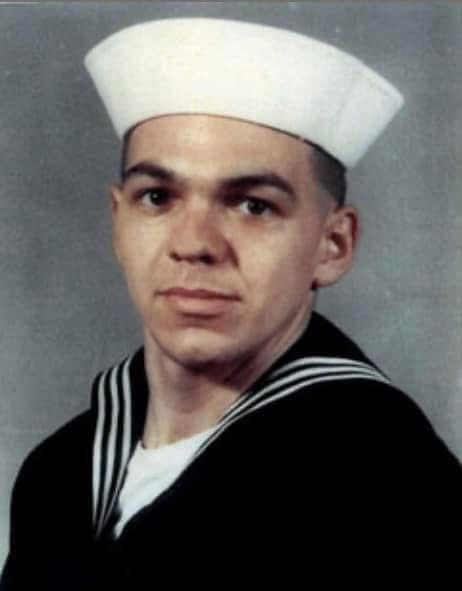
Ernest Eugene Sanville (14 Nov 1943 – 31 Aug 1968) Service #B103235
Hospital Corpsmen Third Class, Posthumously Promoted to Hospital Corpsman Second Class, HM2, E5, United States Navy, H&S Company, assigned to Golf Company, 2nd Bn, 1st Marines, 1st MarDiv, III MAF. Ernest was born in Westfield, Hampden County, Massachusetts, the son of Almon E Sanville and Marie L. Frechette Sanville he had thirteen sisters, Helen, Shirley, Marie, Doris, Margie, Marcia, Irene, Grace, Darlene, Nancy, Carol, Linda and Theresa and one brother Gerald Sanville. Ernest was a graduate of Michael High School. He married Shirley “Bruce” Sanville and they had two children Deanne born 24 Apr 1967 and Danielle, the youngest, born 19 July 1968. Ernest Enlisted into service with the United States Navy on 11 Jan 1966 from Boston Massachusetts. Upon completion of recruit training and Hospital corps school in Great Lakes Illinois he was assigned to Naval Base Charleston, South Carolina. He was then sent to Camp Pendleton California for FMSS training. He arrived in Vietnam on 28 May 1968. No other information was found.
HM3 Sanville was killed in action dying as a result of fragmentation wounds sustained from hostile enemy explosive device when his Patrol was ambushed 6 km North of Dien Ban, Quang Nam Province, South Vietnam.
Awards and Honors include: Purple Heart, Combat Action Ribbon, National Defense Service Medal, Vietnam Campaign Medal, Vietnam Service Medal, Navy Presidential Unit Citation, Vietnam Gallantry Cross.
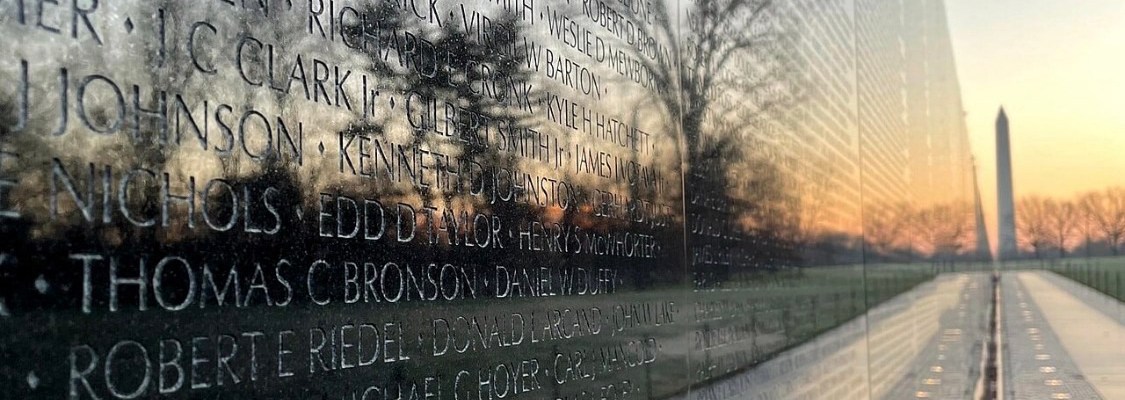
Ernest Eugene Sanville was 24 years old. He is buried at Saint Josephs Cemetery, Hinsdale, Cheshire County, New Hampshire. He is remembered on Panel 45W, Line 16, of the Vietnam Memorial Wall in Washington DC.
If you knew or served with this Individual or any others and have additional information or photos, please contact me directly. You can leave a message for me on messenger or on my Facebook page and I will get back to you as soon as possible.
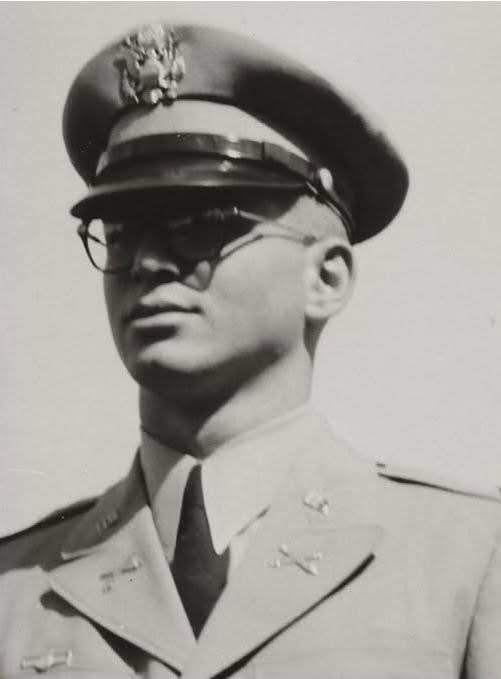
A memory of Pearl Harbor. John Devereux, vividly remembers standing on the front porch of his home in Manoa Valley, at 5 years old, seeing clouds of black smoke rising over Pearl Harbor on December 7, 1941. Suddenly a large shell came zooming toward him over nearby Tantalus Mountain and exploded where he liked to play. John was not sure what was happening, but he had the feeling things were about to change in the peaceful life he and his family enjoyed living in Hawaii. The war in the Pacific had begun! Because of his participation in high school ROTC, John Devereux jumped ahead a year in the program. He excelled at summer camp at Ft. Lewis, Washington and was honored at graduation as a Distinguished Military Graduate. His branch choice was Artillery. John moved on to life as a Second Lieutenant assigned to a Nike Missile Battery at Ft. Bliss, Texas. He was assigned as the supply and sports officer. Football was in his blood, and he joined the Army Football Team as a lineman. He found that his football skills were better than some of the players from large colleges. Then, suddenly, John’s life changed. He developed a urinary tract infection and while in the base hospital, x-rays were taken. The Army discovered for the first time that he was born with only one kidney. He was immediately medically discharged in 1958 “after serving 8 months, 8 days, and 8 hours.” He told his Commanding Officer he wanted to stay in, but regulations were regulations, and the Army would not allow anyone to serve with only one kidney. Sadly, we lost John in 2025. Read more at: https://www.cmc.edu/newsfeed/memory-pearl-harbor
fblifestyle #RIP
http://www.virtualwall.org/dh/HughesJH02a.htm


You must be logged in to post a comment.