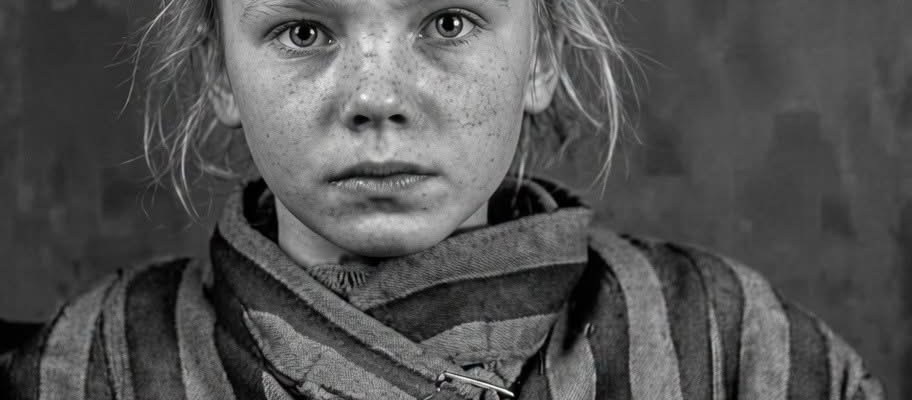
One of the most haunting photographs from Auschwitz is not of a soldier or a battlefield.
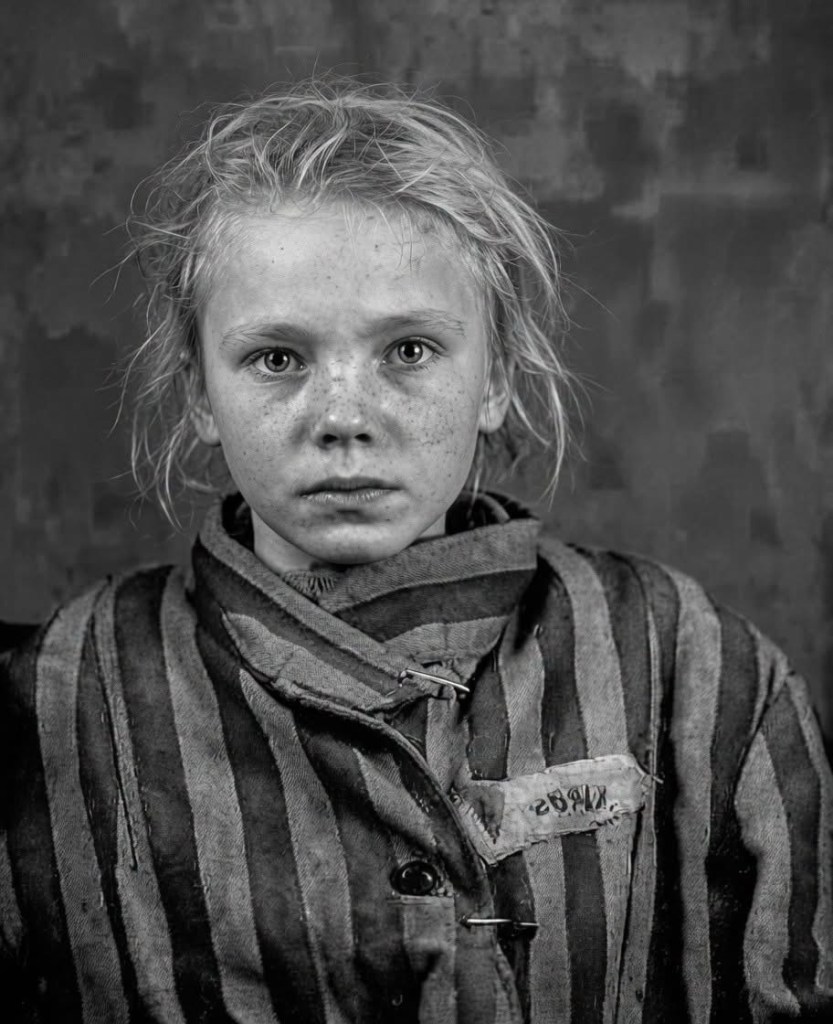
It is the face of a 14-year-old girl.
Her name was Czesława Kwoka.
Born in 1928 in Wólka Złojecka, Poland, she was deported with her mother, Katarzyna, to Auschwitz in December 1942 during the Nazi occupation.
Upon arrival, her mother was registered as prisoner number 26946.
Czesława became prisoner number 26947.
Like thousands of other prisoners, she was photographed for the camp’s identification records.
The photographs were taken by Wilhelm Brasse, a Polish prisoner forced by the SS to document new arrivals.
Years after the war, Brasse recalled that Czesława had been frightened and confused, and that a guard had struck her shortly before her photograph was taken.
The visible mark near her mouth has often been associated with that account.
Czesława’s mother died at Auschwitz on February 18, 1943.
Less than a month later, on March 12, 1943, Czesława also died in the camp.
She was only 14 years old.
The identification photographs survived because prisoners working in the camp’s photographic laboratory preserved many of the negatives that would later become vital historical evidence.
Decades later, artist Marina Amaral digitally colorized Czesława’s portrait, helping modern audiences connect more personally with the face of a child whose life was stolen during the Holocaust.
Today, her photograph remains one of the most powerful reminders that behind every statistic was a human being with a name, a family, and a future that was taken away.
History is not only measured in numbers.
Sometimes, it is remembered through the face of one child.


You must be logged in to post a comment.