
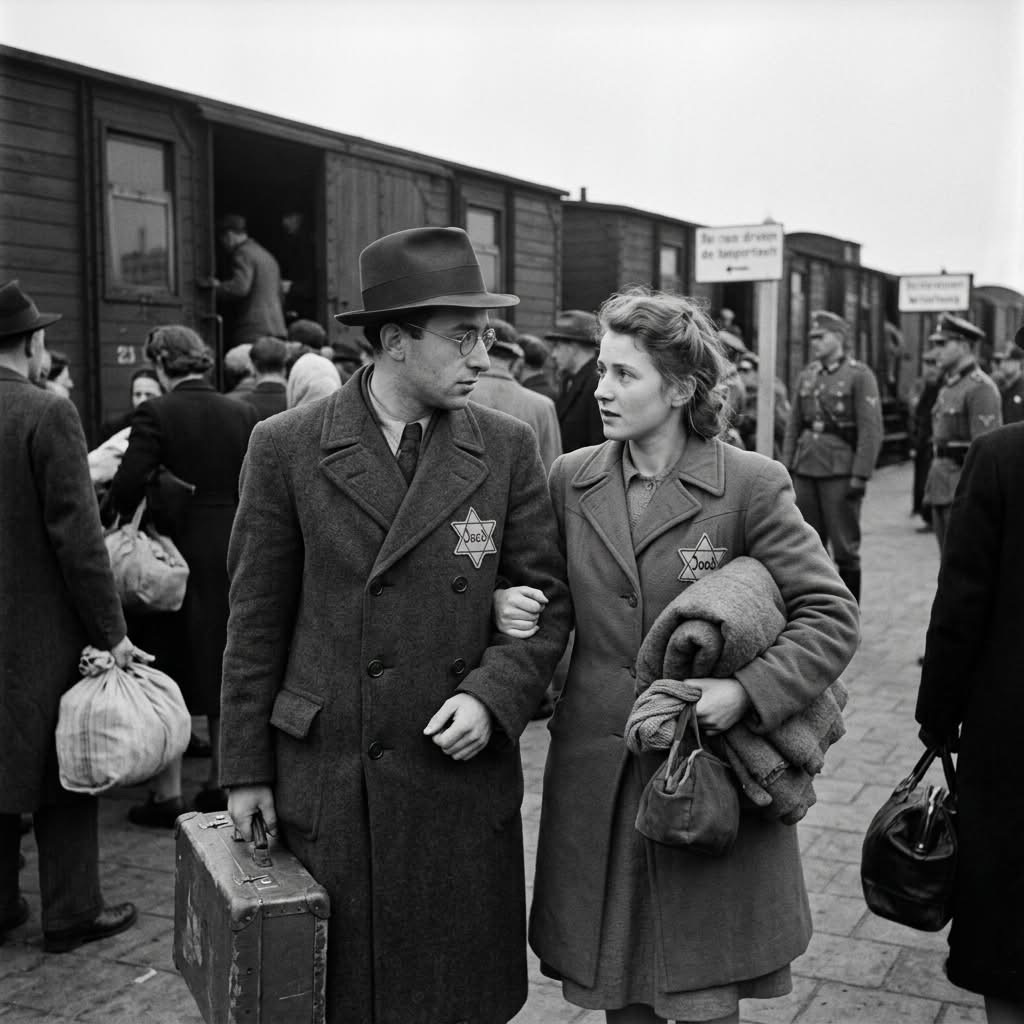
Eddy de Wind and his wife, Friedel, were arrested after the Nazi occupation of the Netherlands. They were deported through Westerbork transit camp to Auschwitz. Men and women were assigned to different sections of the camp, and the couple spent months separated by barbed wire. Eddy later wrote one of the first eyewitness memoirs about Auschwitz immediately after liberation.
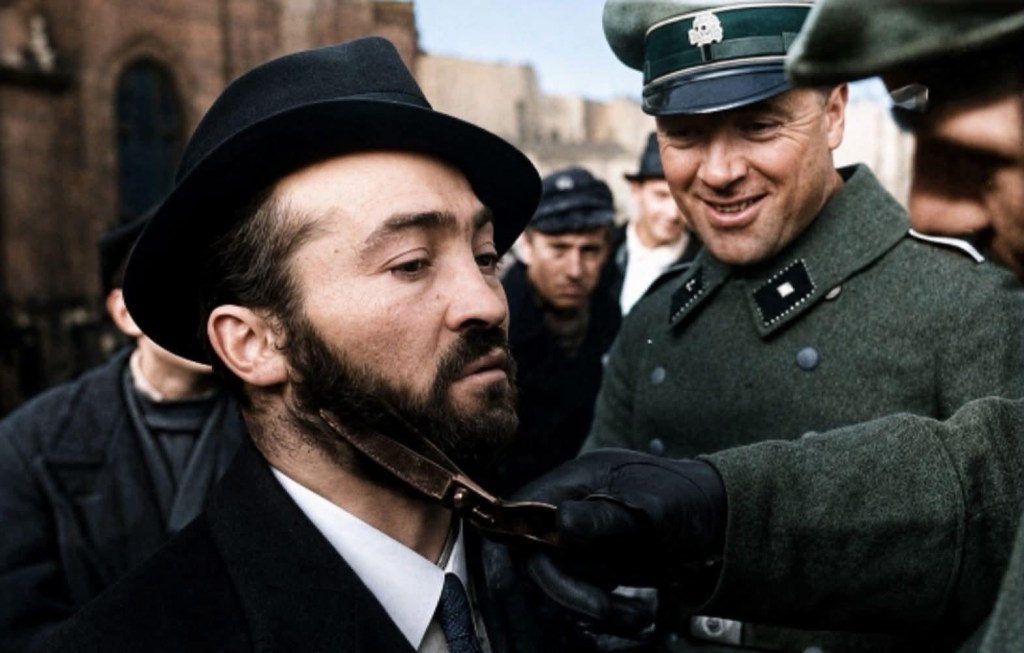
A beard was more than just hair—it was a symbol of faith, identity, and dignity. This act was meant to strip him of his humanity and spread fear among the Jewish community.
We remember not only the millions who were murdered, but also the countless moments of humiliation, cruelty, and suffering they endured.
May we never forget. Never Again. 🕯️
In September 1941, just outside Kyiv, thousands of Jewish families were ordered to gather.
They were told to bring documents, valuables, clothing, and personal belongings. Many believed they were being relocated. Some may have feared something worse, but by then the city was under Nazi occupation, and escape had become almost impossible.
They came as families.
Parents with children.
Elderly people.
Neighbors.
Entire households carrying the last pieces of their lives.
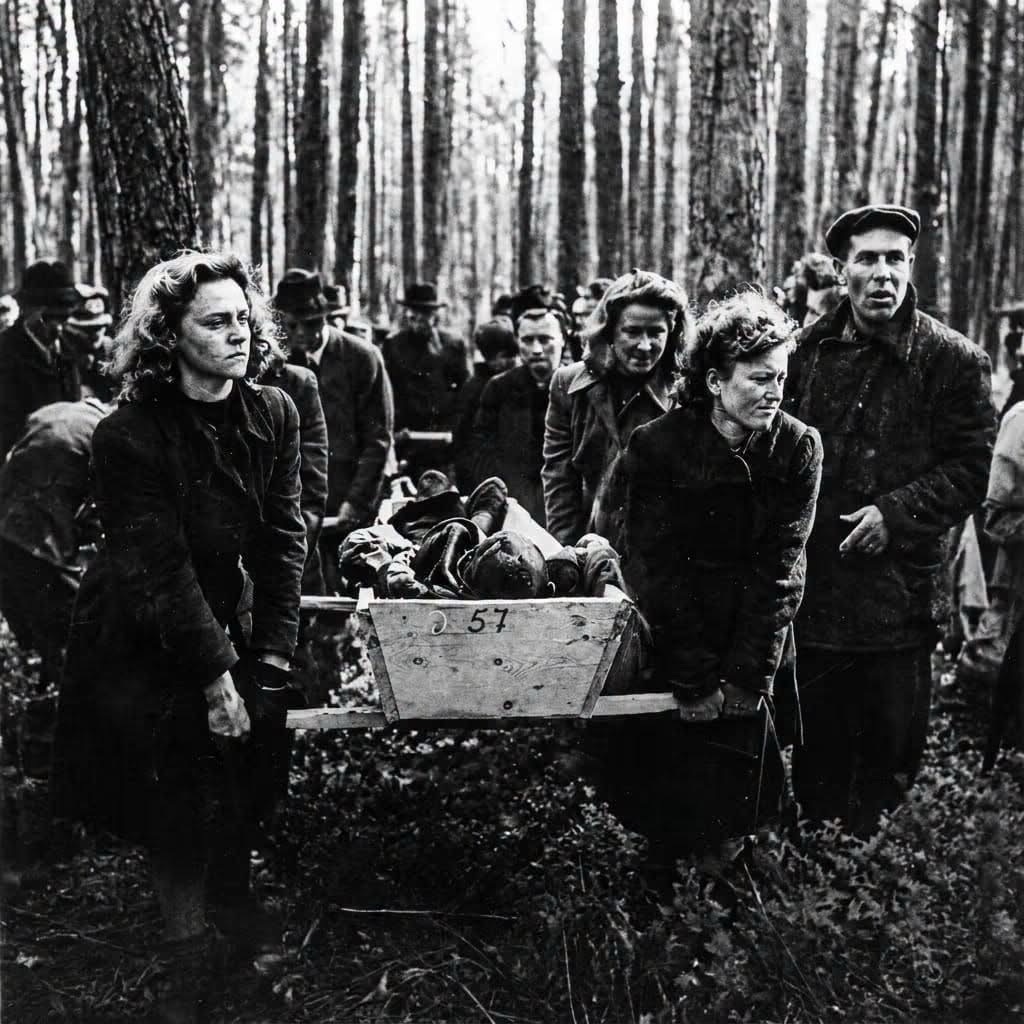
They were led toward a ravine called Babyn Yar, also known as Babi Yar.
There, on September 29 and 30, 1941, one of the largest single massacres of the Holocaust by bullets took place. In only two days, 33,771 Jews from Kyiv and the surrounding area were murdered.
There were no proper funerals.
No coffins.
No marked graves for each person.
Men, women, and children were killed and buried in the ravine where they fell. The earth itself became the grave. A place that had once been part of the landscape was turned into a wound so vast that it could not be understood by numbers alone.
But Babi Yar was not only a site of death.
It became a place of silence.
For years afterward, the Jewish identity of the victims was often minimized or buried under broader Soviet language about “citizens” and “victims of fascism.” The truth did not disappear, but it was not fully honored for a long time.
That is what makes Babi Yar so haunting.
The victims were first stripped of their lives.
Then, for years, many were stripped of their names, their identities, and the full truth of why they were murdered.
But silence cannot erase what happened.
The ravine remembered.
History remembered.
And today, Babi Yar stands as one of the most devastating reminders of the Holocaust — not only of industrial murder in camps, but of mass shootings carried out in open fields, forests, and ravines across Eastern Europe.
The people who walked there in September 1941 were not just victims in a number.
They were families.
They were children.
They were grandparents.
They were people carrying documents, clothes, memories, and hope.
They thought they were being moved.
Instead, they were led to the edge of history’s darkness.
And even without individual graves, the world must keep saying what happened there:
Babi Yar was a massacre.
The earth was forced to hold them.
And memory must never let them disappear again.

January 20, 1944 — A deportation train from occupied Belgium arrived at Auschwitz-Birkenau.
Exhausted passengers stepped onto the frozen railway platform before sunrise.
SS guards ordered everyone into separate lines.
The elderly, mothers, and young children were quickly separated from healthy adults.
Many were murdered on the day they arrived.
Entire families disappeared without leaving descendants.


You must be logged in to post a comment.