Sandy – THE ONLY AUSTRALIAN WAR HORSE OUT OF 136,000 TO COME HOME FROM WORLD WAR I
During the First World War, more than 136,000 Australian horses, known as Walers, were shipped overseas to serve with the Australian Imperial Force and other Allied forces. Because of Australia’s strict quarantine laws, the risk of disease, and the enormous cost of transport, virtually none were allowed to return home after the war.
The one famous exception was Sandy, the beloved charger of Major General Sir William Throsby Bridges, the founding commander of the Australian Imperial Force.
General Bridges was mortally wounded by a Turkish sniper during the Gallipoli campaign on 15 May 1915 and died three days later while being evacuated to Egypt. Sandy survived and continued serving with veterinary units in Egypt and later France.
In 1917, Australia’s Minister for Defence arranged for Sandy to be brought home as a tribute to the fallen general. After spending time in quarantine in England, Sandy finally returned to Australia in late 1918, becoming the only Australian horse from the approximately 136,000 sent overseas that is known to have come home.
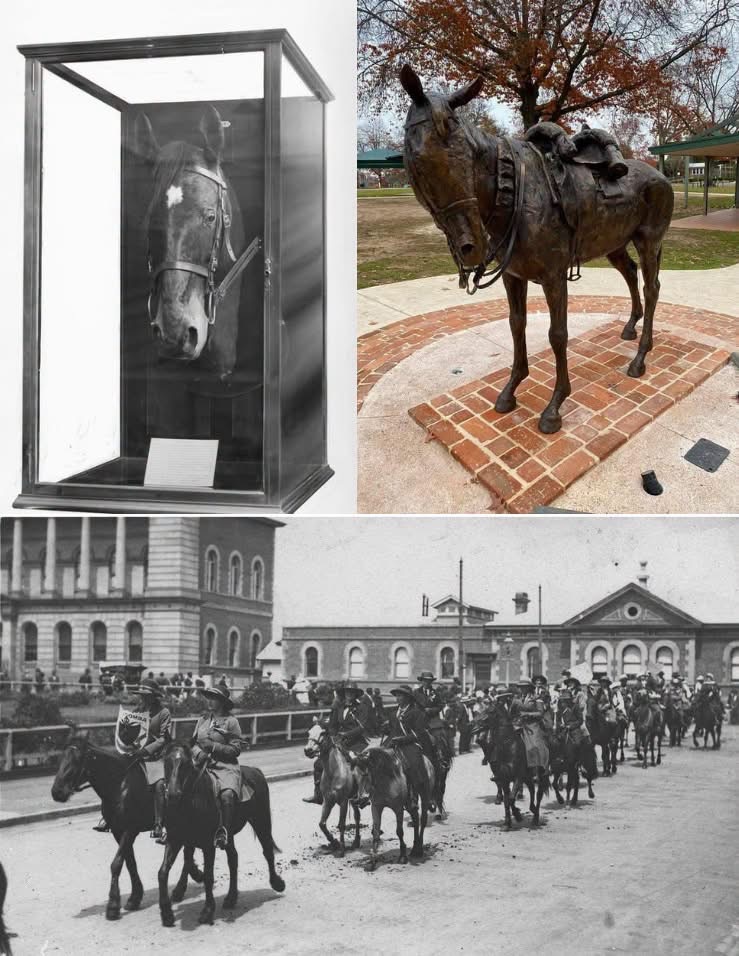
The intention was for Sandy to spend his retirement near General Bridges’ grave at the Royal Military College, Duntroon. However, by then he was elderly, losing his eyesight, and in poor health, so he remained at the Maribyrnong Remount Depot in Victoria. When his condition deteriorated further, he was humanely euthanised in 1923.
His head and neck were preserved for the Australian War Memorial, where they became one of the museum’s most recognised exhibits. A bronze statue of Sandy now also stands at the Royal Military College, Duntroon, honouring both the horse and his lifelong bond with General Bridges.
One interesting detail is that a long-standing story claimed Sandy walked behind General Bridges’ coffin during the general’s funeral procession in Australia. Historians have since shown this could not have happened, as Sandy was still overseas at the time. The legend endured for decades, but the historical records tell a different story.
Sandy’s return made him unique, but he also became a powerful symbol of the 135,999 Australian war horses that never made it home.


You must be logged in to post a comment.