Working on my family tree I just turned the TV on while making coffee this morning. My family comes from West Berlin, so to say my family comes from Berlin in general, but when the Berlin wall went up, it was divided east to west… and our family was divided like so many others..
I don’t know if it was God or what or should I say? I know that it was him because why else would I turn the TV on and they start talking about East Berlin..
How Many Brats PCS’d Around The World Courtesy Of The United States Lines 🇺🇸
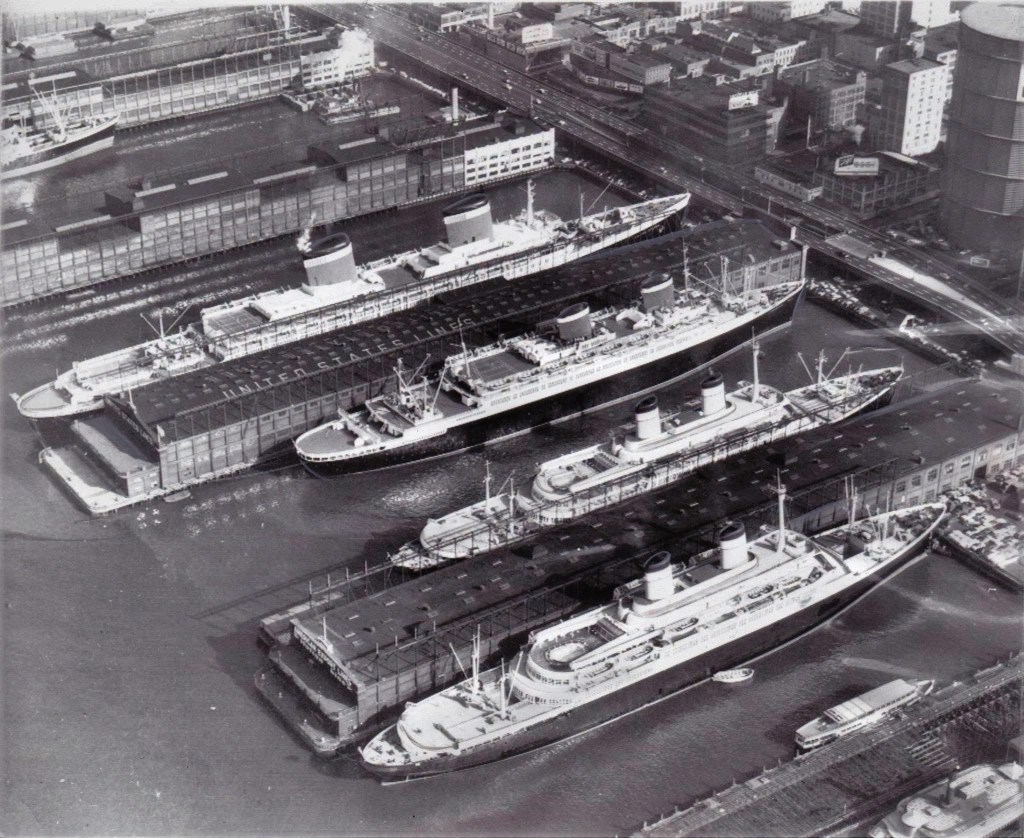
1956 photo depicts the largest United States Lines ships docked together for the first time in NYC’s North River. The SS United States, the largest ship shown at the top of the photo, is docked beside the SS America, followed by SS Independence, and the SS Constitution.
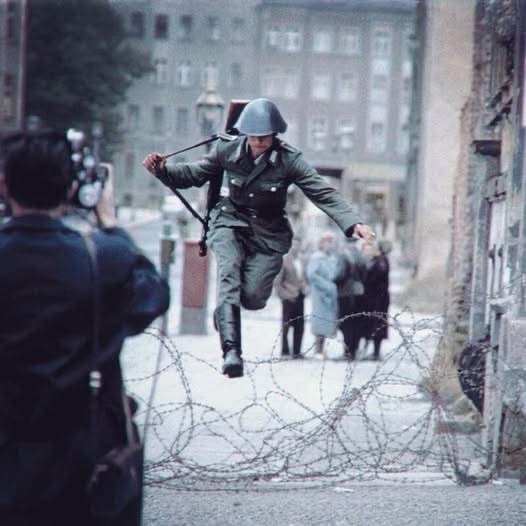
On August 15, 1961, 19-year-old Conrad Schumann was sent to guard the Berlin Wall, which, on its third day of construction, was little more than patches of barbed wire. That day, he witnessed sad scenes of families that were separated by the wall and found himself the target of vitriol from West Germans protesting the wall’s construction.
At around 4 p.m. that afternoon, Schumann saw trucks arrive with material to make the wall even stronger and — panicked by the idea of being “enclosed” within East Germany — he decided to make a break for it by leaping over a low string of barbed wire and into West Germany.
Schumann’s leap over the wall was captured by a photographer at the scene. Dubbed the “Leap Into Freedom,” it remains one of the most iconic images of the Cold War to this day.
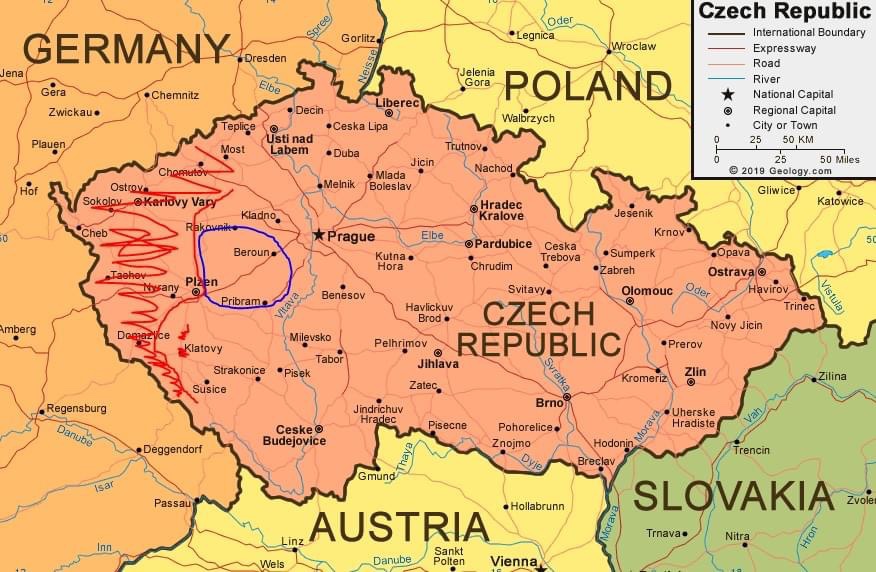
Complex language/ethnicity question. I know in the area East and Northeast of Plzen (blue circle) there is a significant population with German-originating surnames (Müller, Böhm, etc). Up to the beginning of the 1800s, many parish records there were recorded in German, but only briefly later they switch to Czech and never switch back. Of almost all the people I’ve found who immigrated to America from this place (ie Rokycany/Beroun), their graves are recorded in Czech (if not English) and never German (even those with German surnames) so that implies almost all people there from the latter part of the century mainly spoke Czech.
The area to the left, poorly scratched in red, was from what I can tell majority German and German-speaking (ie Sudetenland before WWII). What I’m wondering is were the people in the blue circle “initially” Germans who became “more Czech” when more Czech people migrated in with their language in the 1800s, or was this area “initially” Czech where Germans moved in (significantly enough to garner German priests) and gradually assimilated to Czech?
I feel like this question can apply to a lot of places, like Prague or Sudetenland. Was Prague & Sudetenland in medieval times actually “German”, or was it Czech to then become majority German, then going back to Czech after WWII? Or maybe this is just a “chicken and the egg” thing.
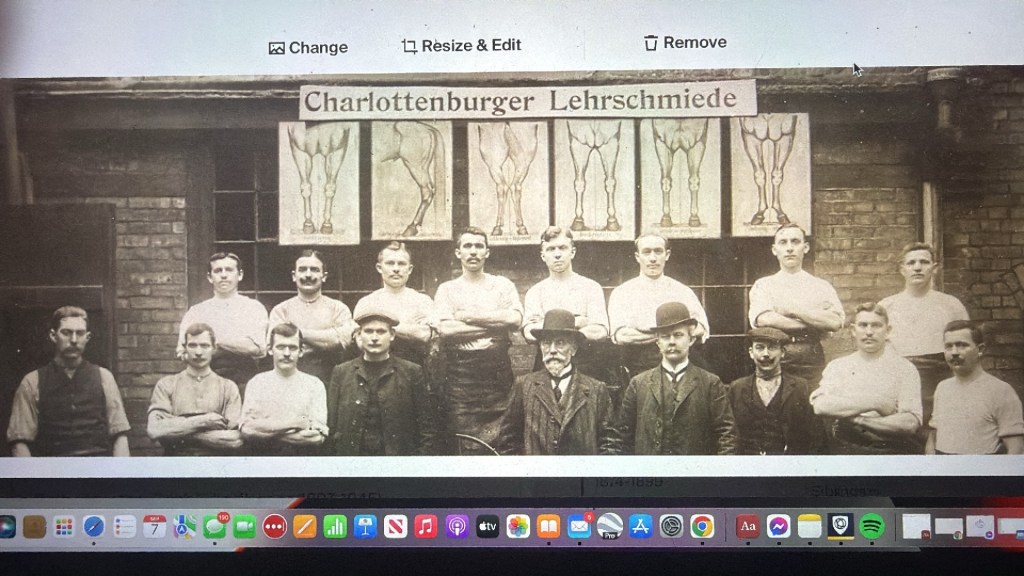
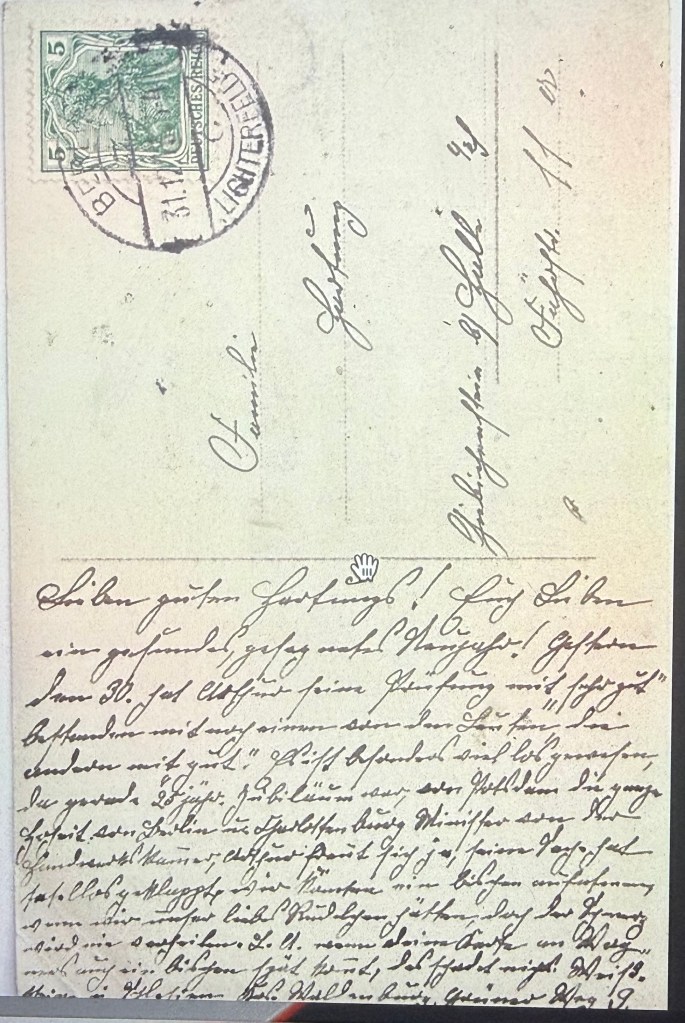
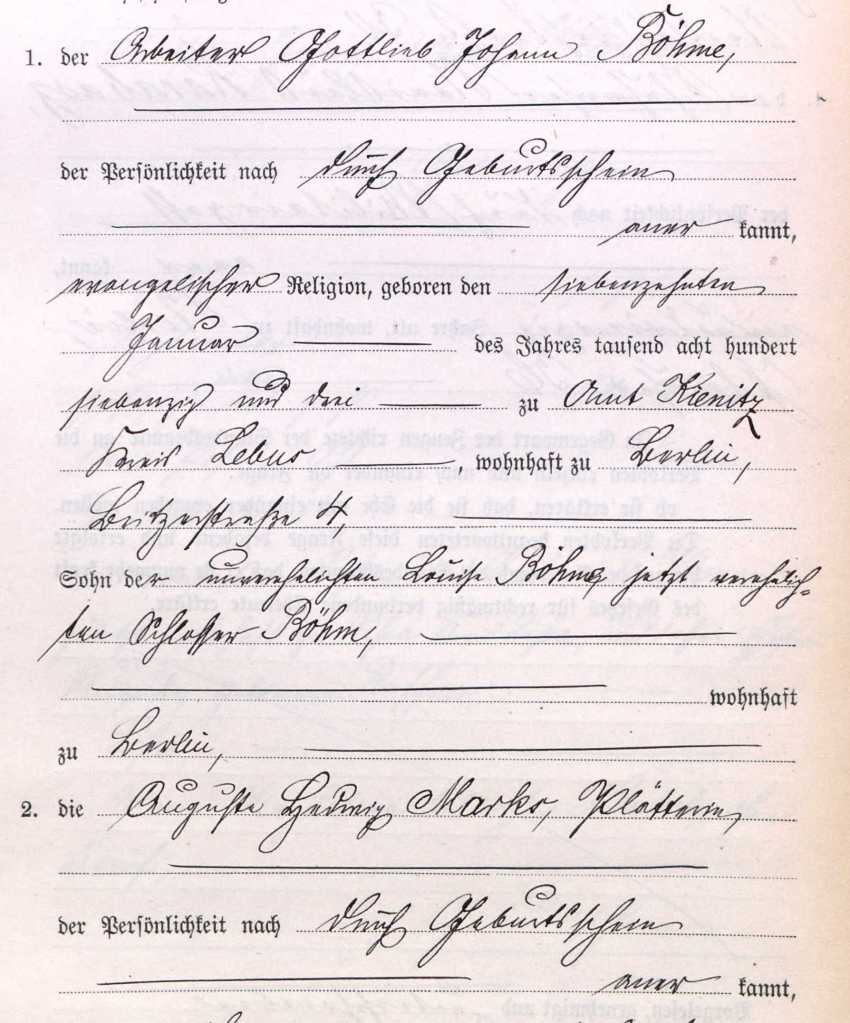
Document for Johann Gottlieb Bohme ( who went by Gottlieb )
First page: 1. The Schmied (smith) Christian Heinrich Bernhard Böhm…of evangelic religion, born… in Saalfeld, Sachsen Heiningen, residing in Berlin Warschauer Straße 7, son of the Schneidermeister (master tailor) Johann Georg Heinrich Carl Böhm and his wife Christiane Frederike Henriette nee Franke, both deceased and formerly residing in Saalfeld. 2. The Marie Luise Böhme, without profession, …, of evangelic religion, …, born Kienitz, Kreis Lebus, reisiding in Berlin Warschauer Straße 7, daughter of the labourer Friedrich Böhme and his wife nee Engel, he deceased and formerly residing in Kienitz, she deceased and formerly residing in Berlin, Like · Reply · 8 hrs Ernst Simonsen Ernst Simonsen I read : Bride: worker Friedrich Böhme and Marie Engel, Groom: Schneidermeister Johann Georg Heinrich Carl Böhm and Christiane Frederike Henriette nee Franke. Watch the different names “Böhm” and ” Böhme”
When researching the Böhme Family name, I found so many spelling mistakes, errors and miss spellings there are so many meanings and spellings so be careful!!!!


You must be logged in to post a comment.