Looking for family ..
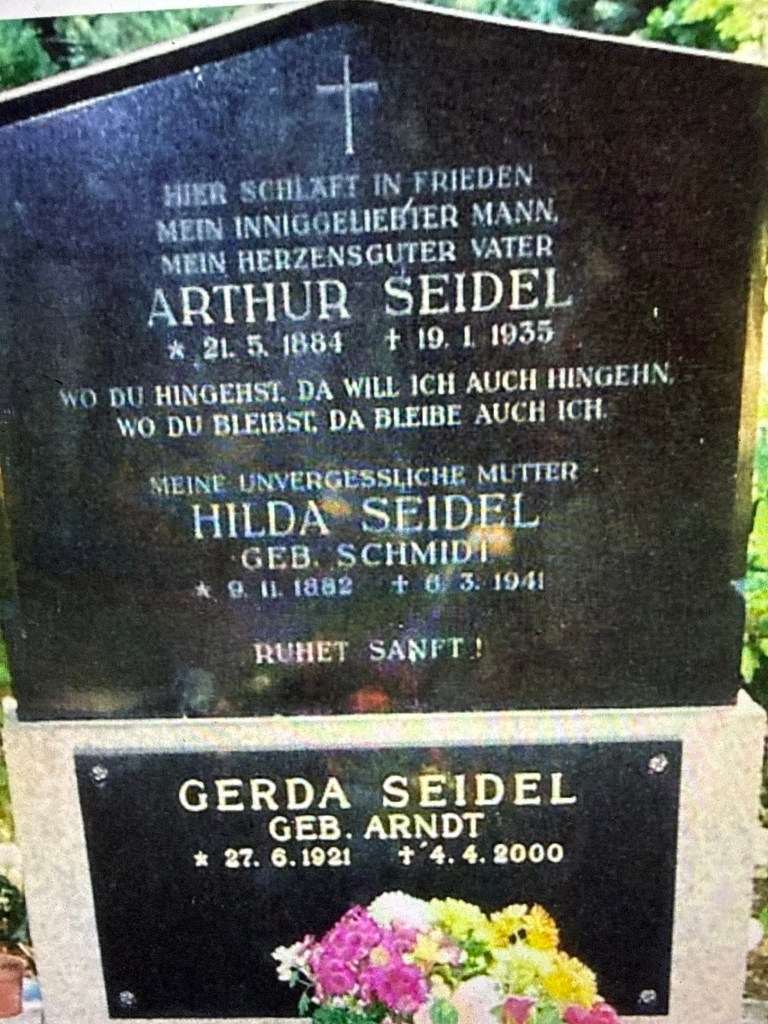
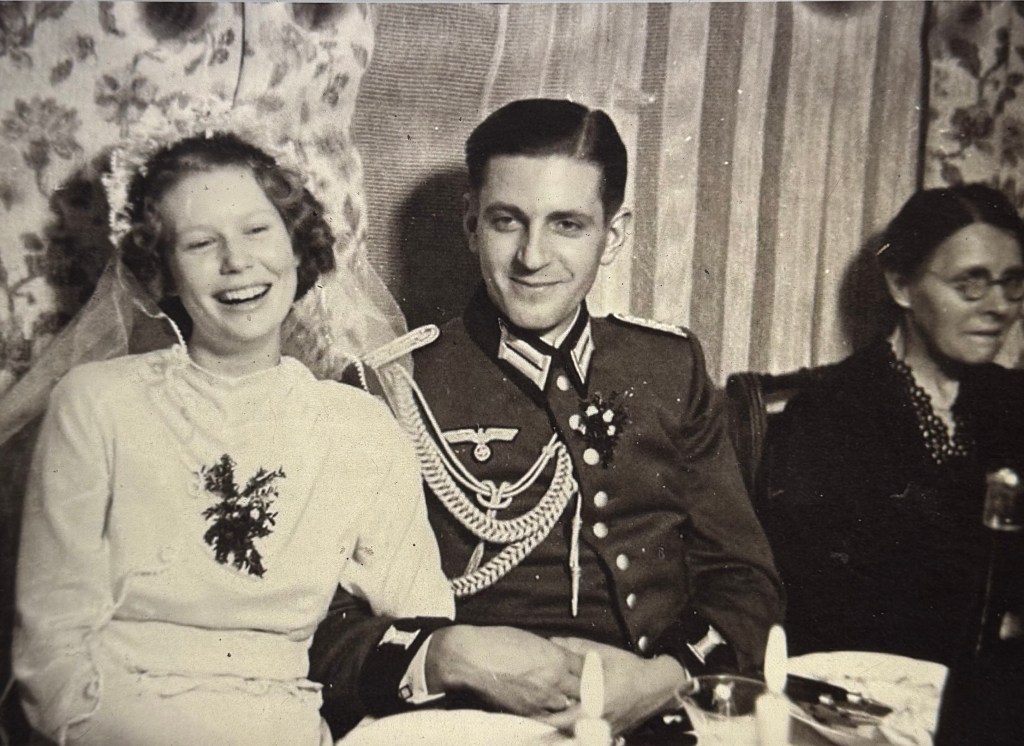
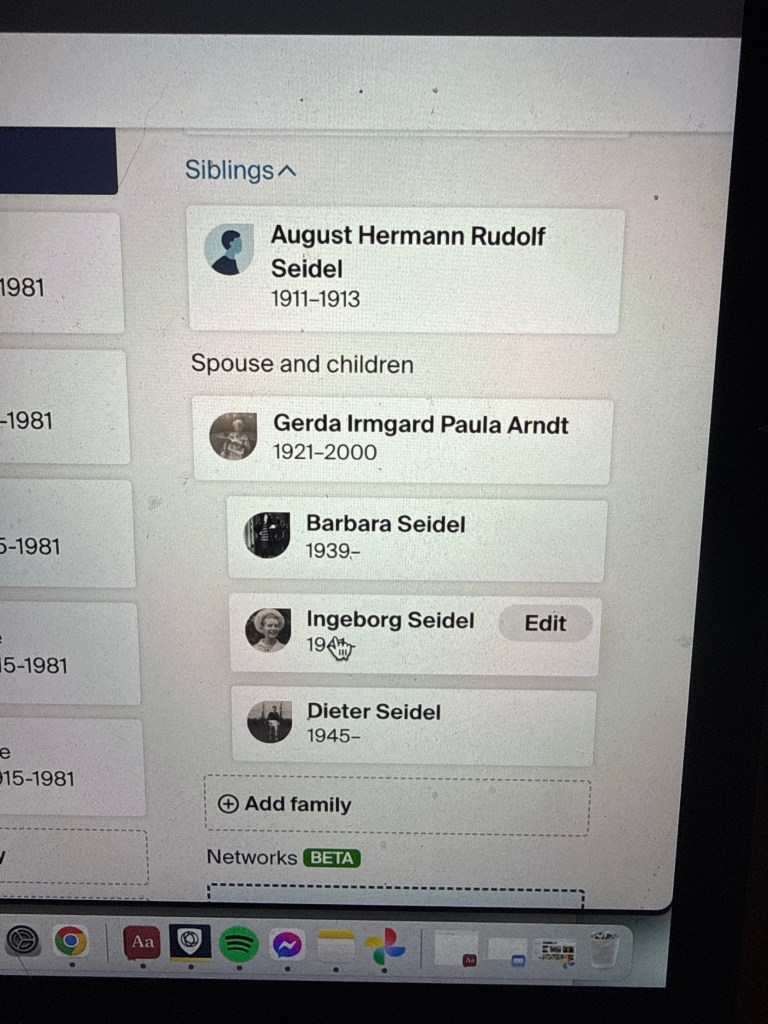
On the left is Gerda ( born Arndt ) with her husband, my grandfather Erich Seidel … Martha Hilda Schmidt .. his mother on the right …

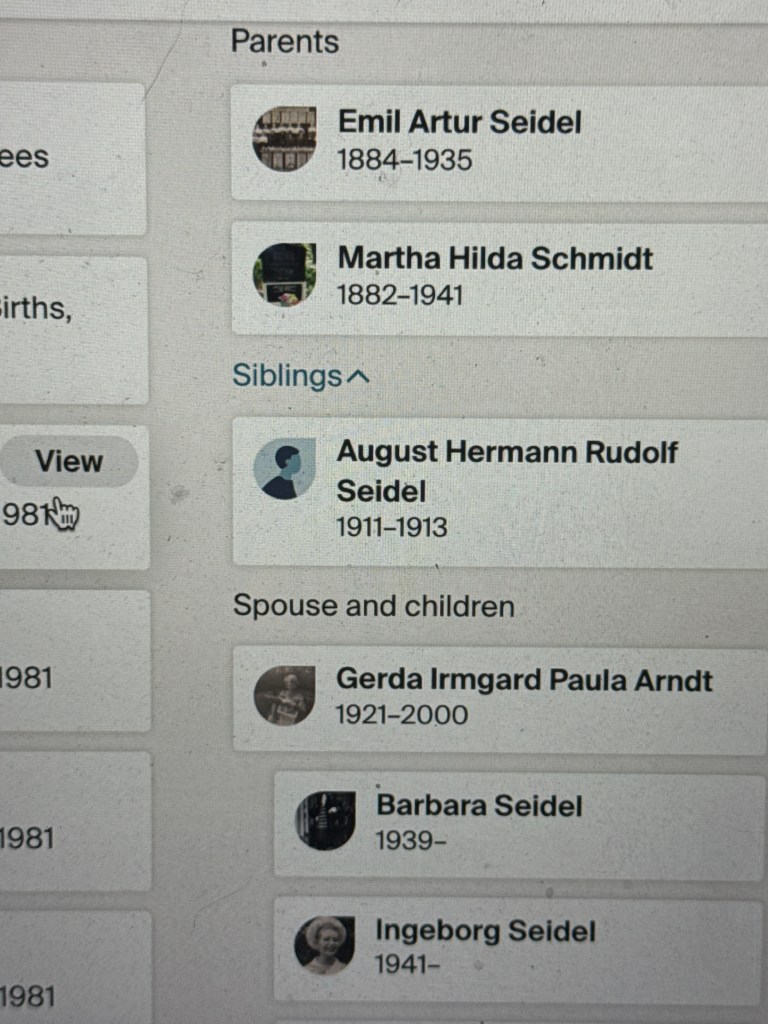
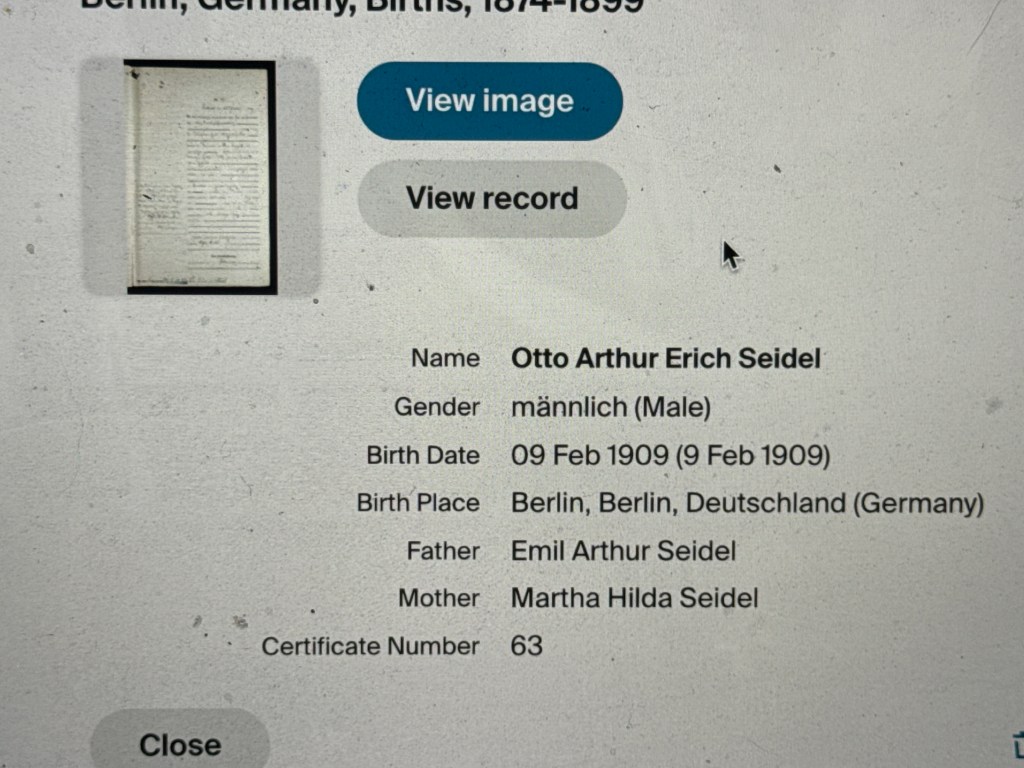
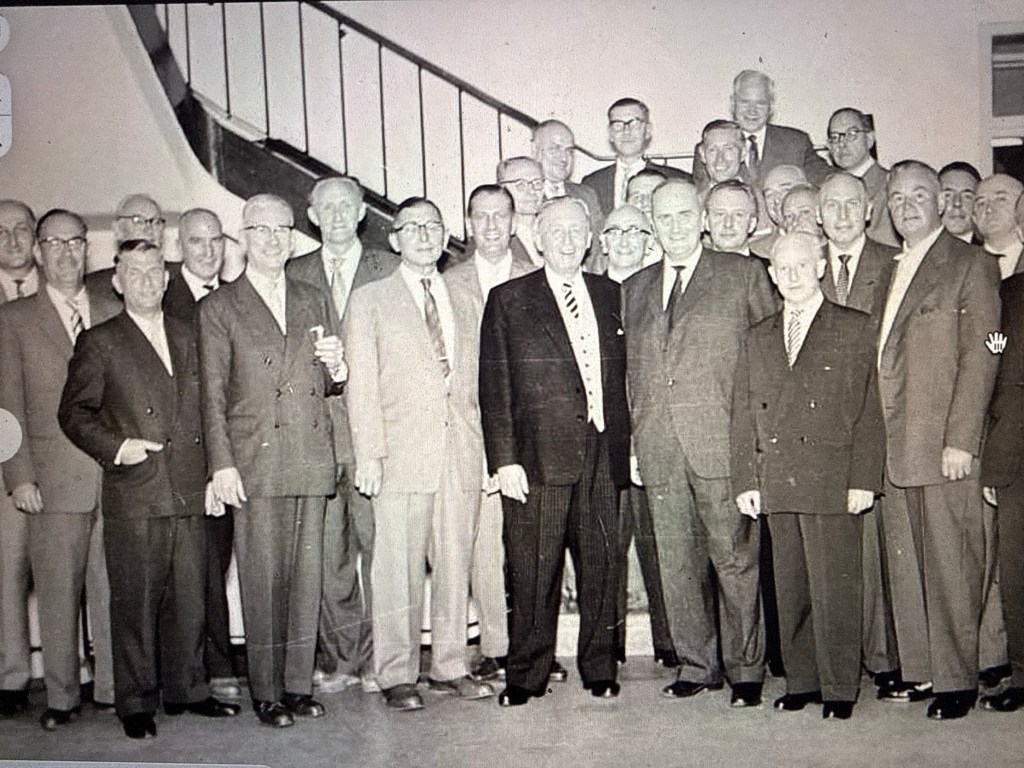
He was an architeckt in Berlin
This is the only photo of his father that I have
Helping others getting to know there roots.. family .. and tradition as well as my own… welcome!
Looking for family ..
On the left is Gerda ( born Arndt ) with her husband, my grandfather Erich Seidel … Martha Hilda Schmidt .. his mother on the right …

He was an architeckt in Berlin
This is the only photo of his father that I have
Working on my family tree I just turned the TV on while making coffee this morning. My family comes from West Berlin, so to say my family comes from Berlin in general, but when the Berlin wall went up, it was divided east to west… and our family was divided like so many others..
I don’t know if it was God or what or should I say? I know that it was him because why else would I turn the TV on and they start talking about East Berlin..

IN THEIR OWN WORDS. . .
WITNESS SWEARS TITANIC SAILORS WERE UNTRAINED
By Robert DeSando
This is the second installment in a series of first-hand accounts from New Jersey survivors of the Titanic sinking. Some statements are drawn from transcribed interviews, signed affidavits, transcripts of testimony before post-disaster investigative bodies or excerpts from autobiographies. They are edited only for length. So, they may contain information later determined to be erroneous or claims that vary from the recollections of other survivors.
Today we examine the sworn testimony of first class passenger Mrs. J. Stuart White, who was born as Ella Bertha Holmes in Boston, Massachusetts on December 18, 1856. The wealthy widow was travelling with Marie Grice Young, also an affluent widow with whom she shared her country estate, Briarcliff Manor in New York, and sumptuous apartment in Waldorf Astoria Hotel in Manhattan. Miss Young was gifted pianist and music teacher who tutored President Theodore Roosevelt’s children. Mrs. White met Miss Young in Atlantic City. They became lifelong companions and travelled extensively across Europe and America. One of their favorite vacation destinations was Lakewood, N.J. It was there that Mrs. White met Nellie Mayo Bessette, a waitress at the grand Laurel in the Pines Hotel, and hired her as her personal maid. All three women were aboard the Titanic when it began to sink.
Mrs. White testified on Day 12 (May 2, 1912) of the United States Senate Inquiry into the Titanic catastrophe:
“I was just sitting on the bed, just ready to turn the lights out. It did not seem to me that there was any very great impact at all (when the ship struck the iceberg). It was just as though we went over about a thousand marbles. There was nothing terrifying about it at all. We heard no alarm. We went immediately on deck ourselves. We were all standing around inside, waiting to know what the result was. Nothing had been said about the lifeboats in any way, when suddenly Capt. (E. J.) Smith came down the stairway and ordered us all to put on our life preservers, which we did. We stood around for another 20 minutes, then, I should think. . .
“I entered the lifeboat from the top deck, where the boats were. We had to enter the boat there. There was no other deck to the steamer (where passengers could board a lifeboat) except the top deck. It was a perfect rat trap. There was no other deck that was open, at all. We got into it very easily. We got into the lifeboat without any inconvenience whatever. As I said, my condition was such that I had to be handled rather carefully, (Mrs. White had sprained an ankle very badly boarding the Titanic) and there was no inconvenience at all. . .
“(Before) we cut loose from the ship two of the seamen with us – the men, I should say; I do not call them seamen; I think they were dining-room stewards – before we were cut loose from the ship they took out cigarettes and lighted them on an occasion like that! That is one thing that we saw. All of those men escaped under the pretense of being oarsmen. The man who rowed me took his oar and rowed all over the boat, in every direction. I said to him, ‘Why don’t you put the oar in the oarlock?’ He said, ‘Do you put it in that hole?’ I said ‘Certainly.’ He said, ‘I never had an oar in my hand before.’ I spoke to the other man and he said; ‘I have never had an oar in my hand before, but I think I can row.’ Those were the men that we were put to sea with at night – with all these magnificent fellows left on board, who would have been such a protection to us. . .
“We simply rowed away. We had the order, on leaving the ship, to do that. The officer who put us in the boat – I do not know who he was – gave strict orders to the seamen, or the men, to make for the light opposite and land the passengers and get back just as soon as possible. That was the light that everybody saw in the distance. I saw it distinctly. It was a boat of some kind. Oh, it was 10 miles away, but we could see it distinctly. There was no doubt but that it was a boat. But we rowed and rowed and rowed, and then we all suggested that it was simply impossible for us to get to it; that we never could get to it, and the thing to do was to go back and see what we could do for the others. We only had 22 in our boat.
“Then we turned and went back, and lingered around there for a long time, trying to locate the other boats, but we could not locate them except by hearing them. The only way they could locate us was by my electric lamp. The lamp on the boat was absolutely worth nothing. They tinkered with it all along, but they could not get it in shape. I had an electric cane – a cane with an electric light in it – and that was the only light we had. We sat there for a long time, and we saw the ship go down, distinctly. . .
“It was something dreadful. Nobody ever thought the ship was going down. I do not think there was a person that night, I do not think there was a man on the boat who thought the ship was going down. They speak of the bravery of the men. I do not think there was any particular bravery, because none of the men thought it was going down. If they had thought the ship was going down, they would not have frivoled as they did about it. Some of them said, ‘When you come back you will need a pass,’ and, ‘You can not get on tomorrow morning without a pass.’ They never would have said these things if anybody had had any idea that the ship was going to sink.
“In my opinion, the ship when it went down was broken in two. I think very probably it broke in two. I heard four distinct explosions, which we supposed were the boilers. Of course, we did not know anything about it. The explosions were tremendous.
“We did what we were ordered to do. We went toward the light. That seemed to be the verdict of everybody in the boat. We had strict orders to do that from the officer or whoever started us off – land the passengers and come right back for the others. We all supposed that boat was coming toward us, on account of all the rockets that we had sent up.
“Not until we had gone out for half an hour and found it perfectly useless to attempt to reach that boat or that light. Then everybody suggested going back and we did, too, but we could not. The sailor changed our course and tried to go back. That was after trying to reach that light for three-quarters of an hour. It was evidently impossible to reach it. It seemed to be going in the same direction in which we were going, and we made no headway toward it at all. Then we turned and tried to go back.”
(Mrs. White was asked by a member of the Senate panel to describe what she saw after daybreak.)
“We saw one iceberg in front of us. Of course, we could not see it, because I was standing this way (indicating). I did not even see the Carpathia until my attention was called to her. I stood up all night long because I could not get up onto the seats which were very high, on account of my foot being bound up. I had no strength in my foot, and I stood all night long.
“After we got aboard the Carpathia, we could see 13 icebergs and 45 miles of floating ice, distinctly, right around us in every direction. Everybody knew we were in the vicinity of icebergs. Even in our staterooms it was so cold that we could not leave the port hole open. It was terribly cold. I made the remark to Miss Young, on Sunday morning: ‘We must be very near icebergs to have such cold weather as this.’ It was unusually cold.
“It was a careless, reckless thing. It seems almost useless to speak of it. No one was frightened on the ship. There was no panic. I insisted on Miss Young getting into something warm, and I got into something warm, and we locked our trunks and bags and went on deck. There was no excitement whatever. Nobody seemed frightened. Nobody was panic-stricken. There was a lot of pathos when husbands and wives kissed each other goodbye, of course.
“We were the second boat pushed away from the ship, and we saw nothing that happened after that. We were not near enough. We heard the yells of the steerage passengers as they went down, but we saw none of the harrowing part of it at all.
“As I have said before, the men in our boat were anything but seamen, with the exception of one man. The women all rowed, every one of them. Miss Young rowed every mile. The men could not row. They did not know the first thing about it. Miss Swift, from Brooklyn, rowed every mile, from the steamer to the Carpathia. Miss Young rowed every minute also, except when she was throwing up, which she did six or seven times, Countess Rothe stood at the tiller. Where would we have been if it had not been for our women, with such men as that put in charge of the boat? Our head seaman would give an order and those men who knew nothing about the handling of a boat would say, ‘If you don’t stop talking through that hole in your face there will be one less in the boat.’ We were in the hands of men of that kind. I settled two or three fights between them, and quieted them down. Imagine getting right out there and taking out a pipe and filling it and standing there smoking, with the women rowing, which was most dangerous; we had woolen rugs all around us.
“Another thing which I think is a disgraceful point. The men were asked, when they got into our boat, if they could row. Imagine asking men that who are supposed to be at the head of lifeboats – imagine asking them if they can row.
“Just to think that on a beautiful starlit night – you could see the stars reflected in the water – with all those Marconi warnings, that they would allow such an accident to happen, with such a terrible loss of life and property.
“I never saw a finer body of men in my life than the men passengers on this trip – athletes and men of sense – and if they had been permitted to enter these lifeboats with their families the boats would have been appropriately manned and many more lives saved, instead of allowing the stewards to get in the boats and save their lives, under the pretense that they could row, when they knew nothing whatever about it.”

(Robert DeSando is a former journalist and author of the book “A Titanic Loss for New Jersey” available at amazon.com and barnesandnoble.com.)
http://refer.dna.ancestry.com/s/tmarkgraf77 Im asking if you can … can you please purchase a DNA test through me. You see I get a ” reward ” of 10 dollars going towards my ancestry research when you purchase through the link provided…. Thank You!! 🙂


You must be logged in to post a comment.