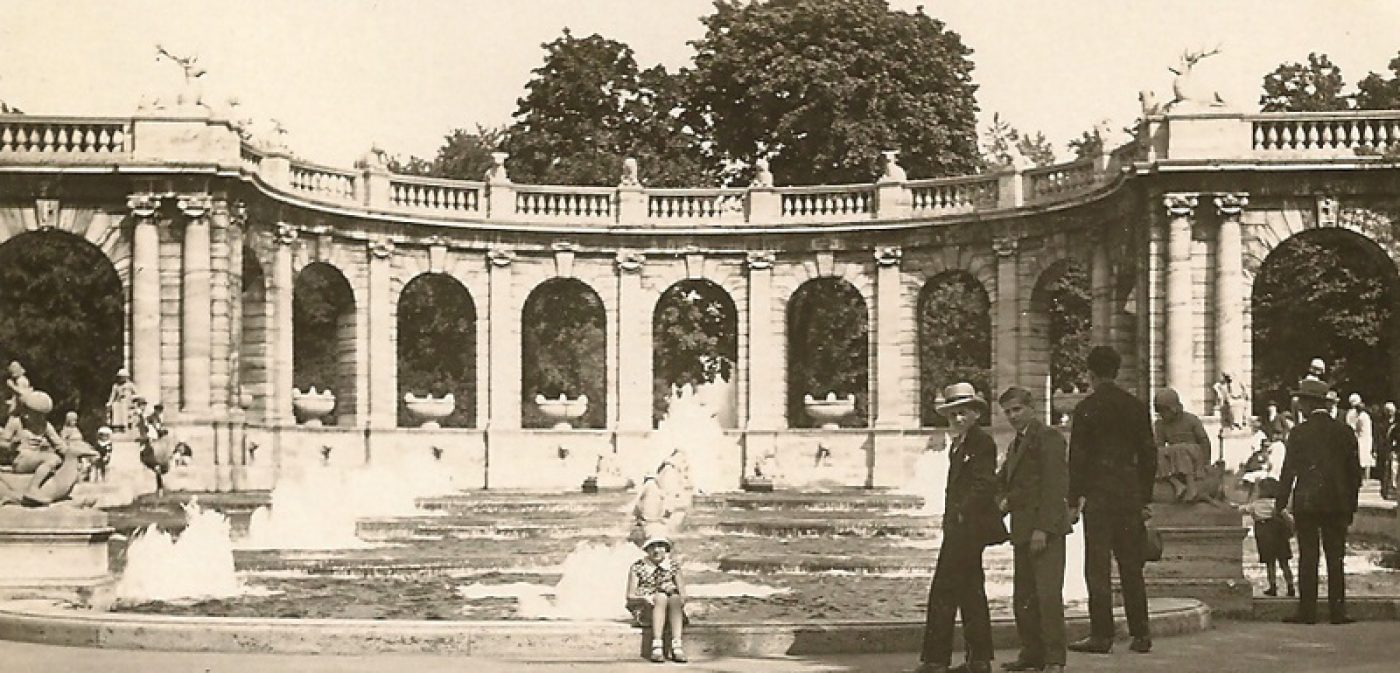

Finding Your Nazi Era German Roots
On this day 29 July in Military History
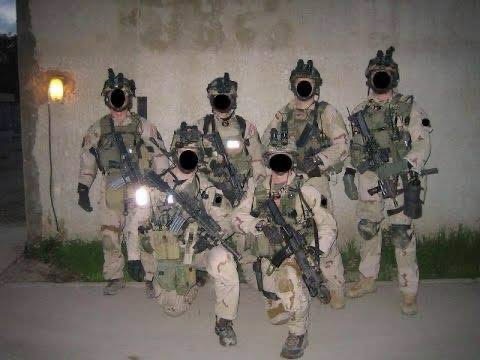
On this day in U.S. Army SOF history……29-July 2003, U.S. Army Delta Soldiers in Tikrit, after a bloody hand-to-hand fight, overpowered and arrested Saddam Hussein’s bodyguard, Mohammed Ibrahim Omar al-Musslit, which led to Hussein’s capture in December of that year.
—Mud
Sandy the Australian Warhorse
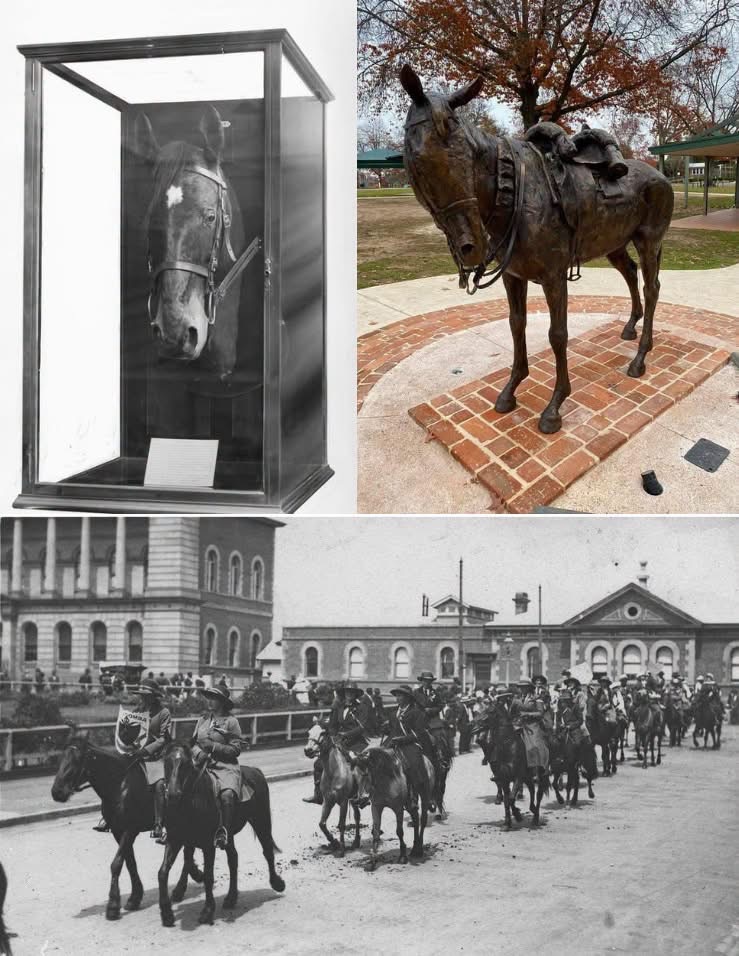
Sandy – THE ONLY AUSTRALIAN WAR HORSE OUT OF 136,000 TO COME HOME FROM WORLD WAR I
During the First World War, more than 136,000 Australian horses, known as Walers, were shipped overseas to serve with the Australian Imperial Force and other Allied forces. Because of Australia’s strict quarantine laws, the risk of disease, and the enormous cost of transport, virtually none were allowed to return home after the war.
The one famous exception was Sandy, the beloved charger of Major General Sir William Throsby Bridges, the founding commander of the Australian Imperial Force.
General Bridges was mortally wounded by a Turkish sniper during the Gallipoli campaign on 15 May 1915 and died three days later while being evacuated to Egypt. Sandy survived and continued serving with veterinary units in Egypt and later France.
In 1917, Australia’s Minister for Defence arranged for Sandy to be brought home as a tribute to the fallen general. After spending time in quarantine in England, Sandy finally returned to Australia in late 1918, becoming the only Australian horse from the approximately 136,000 sent overseas that is known to have come home.
The intention was for Sandy to spend his retirement near General Bridges’ grave at the Royal Military College, Duntroon. However, by then he was elderly, losing his eyesight, and in poor health, so he remained at the Maribyrnong Remount Depot in Victoria. When his condition deteriorated further, he was humanely euthanised in 1923.
His head and neck were preserved for the Australian War Memorial, where they became one of the museum’s most recognised exhibits. A bronze statue of Sandy now also stands at the Royal Military College, Duntroon, honouring both the horse and his lifelong bond with General Bridges.
One interesting detail is that a long-standing story claimed Sandy walked behind General Bridges’ coffin during the general’s funeral procession in Australia. Historians have since shown this could not have happened, as Sandy was still overseas at the time. The legend endured for decades, but the historical records tell a different story.
Sandy’s return made him unique, but he also became a powerful symbol of the 135,999 Australian war horses that never made it home.
Barracks
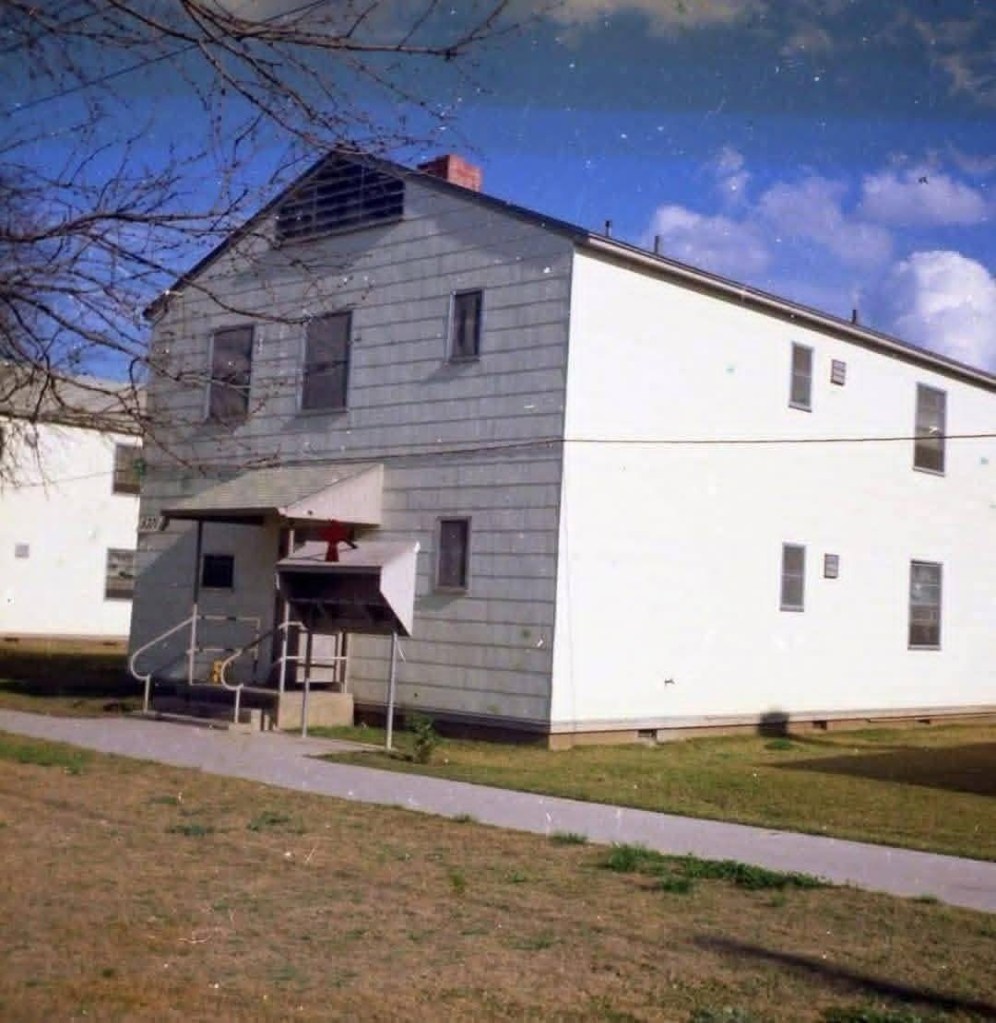
Anyone remember being in one of this old barracks. What year,drop below?
Berlin
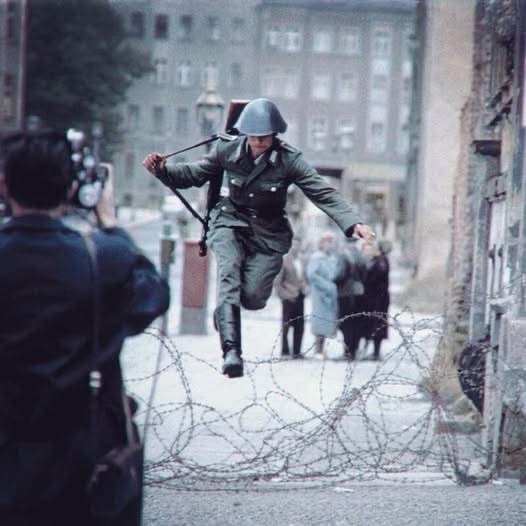
On August 15, 1961, 19-year-old Conrad Schumann was sent to guard the Berlin Wall, which, on its third day of construction, was little more than patches of barbed wire. That day, he witnessed sad scenes of families that were separated by the wall and found himself the target of vitriol from West Germans protesting the wall’s construction.
At around 4 p.m. that afternoon, Schumann saw trucks arrive with material to make the wall even stronger and — panicked by the idea of being “enclosed” within East Germany — he decided to make a break for it by leaping over a low string of barbed wire and into West Germany.
Schumann’s leap over the wall was captured by a photographer at the scene. Dubbed the “Leap Into Freedom,” it remains one of the most iconic images of the Cold War to this day.
73rd Anniversary of the Korean War
Korean War Veterans Association and the Chosin Few Association honor the 73rd Anniversary of the Korean War Armistice !
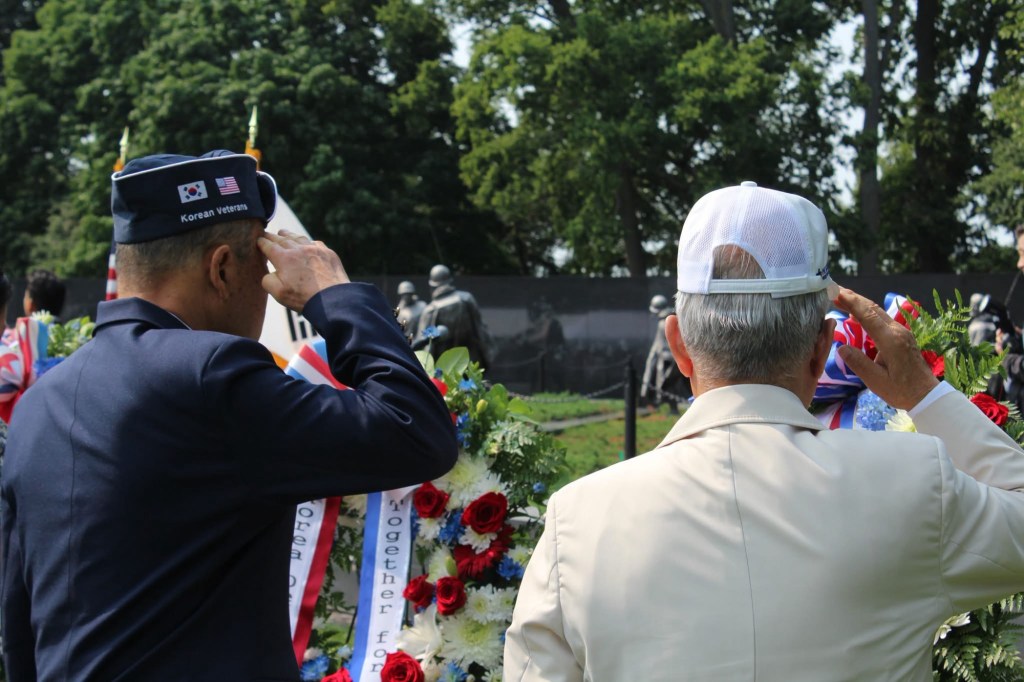
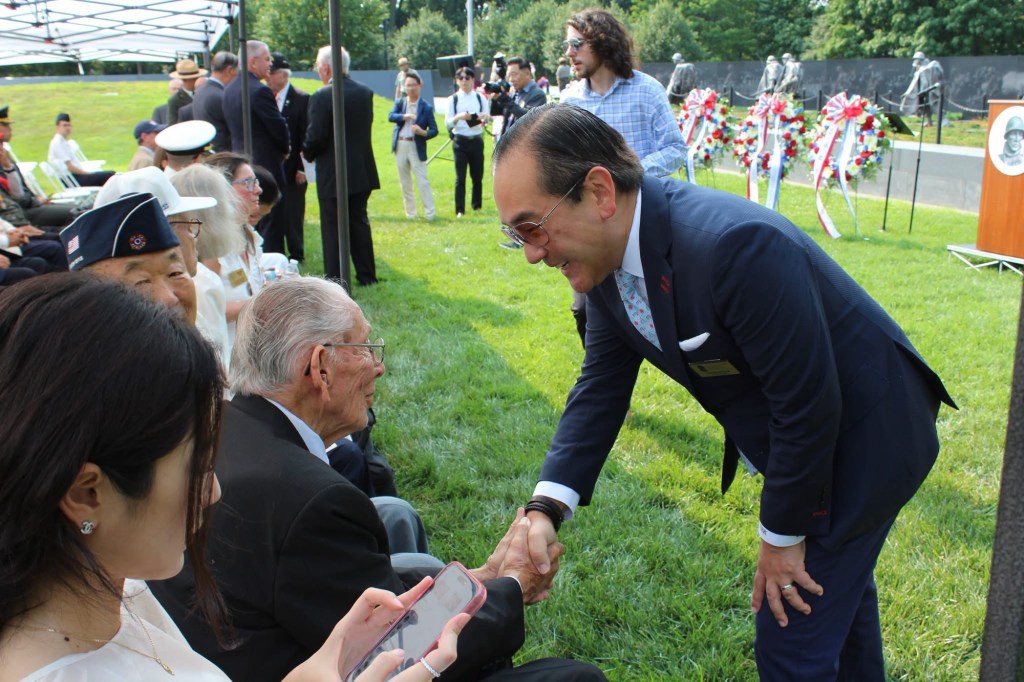
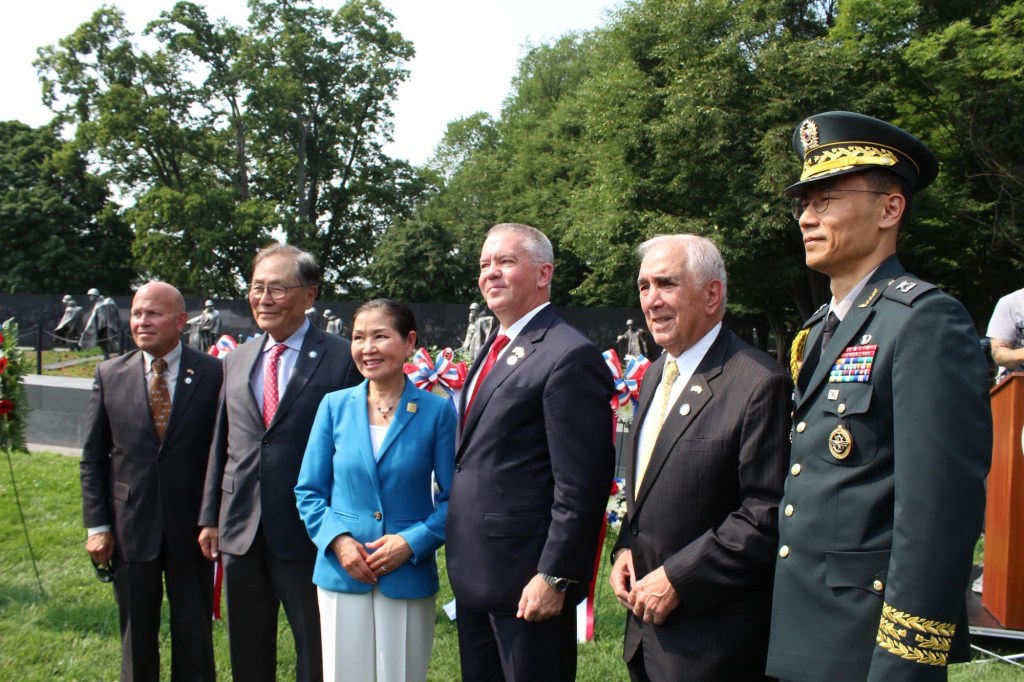
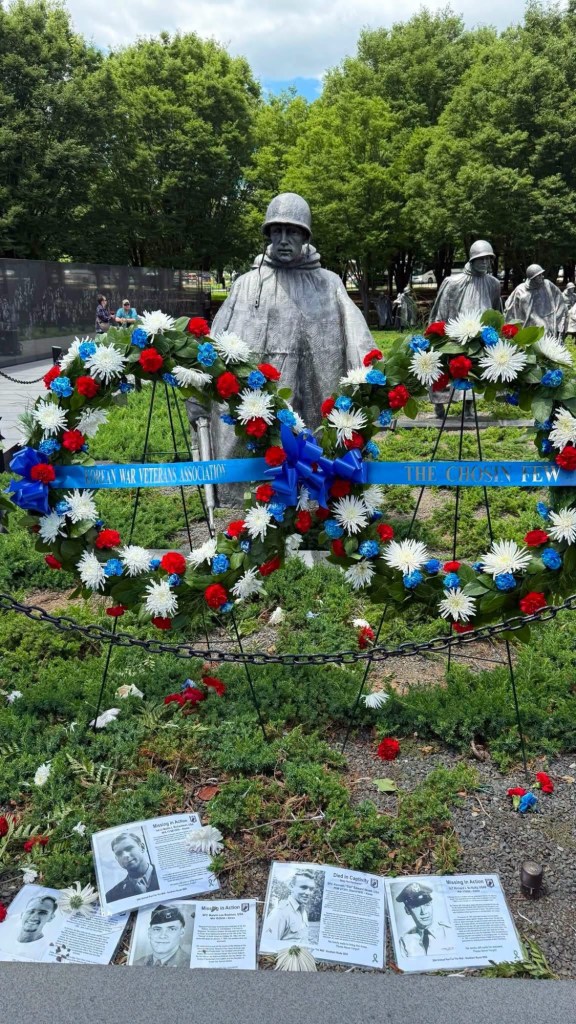
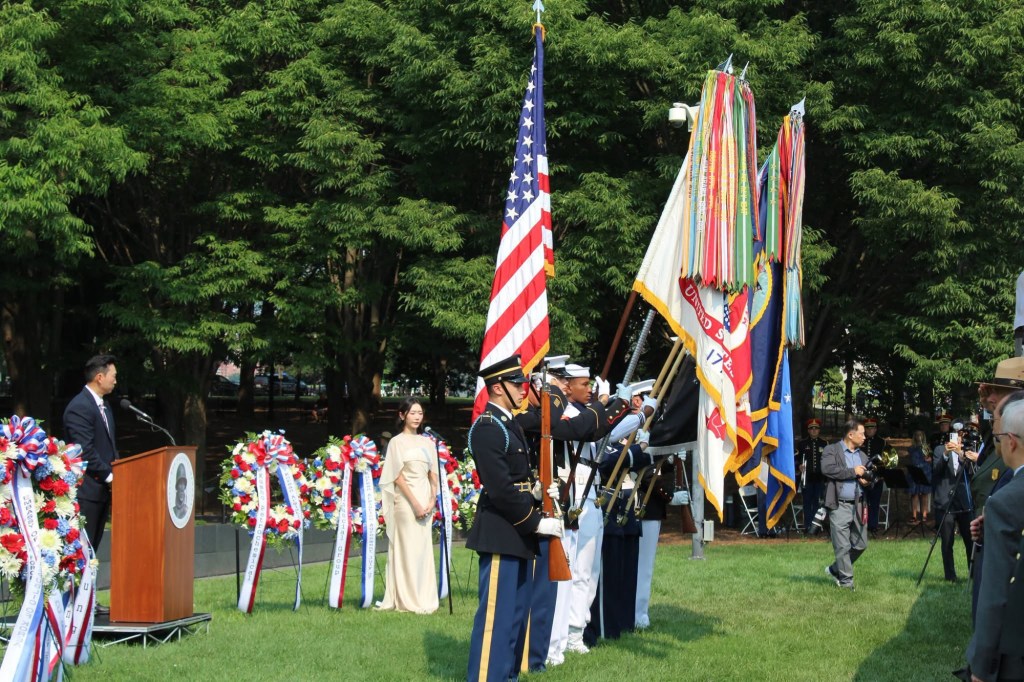
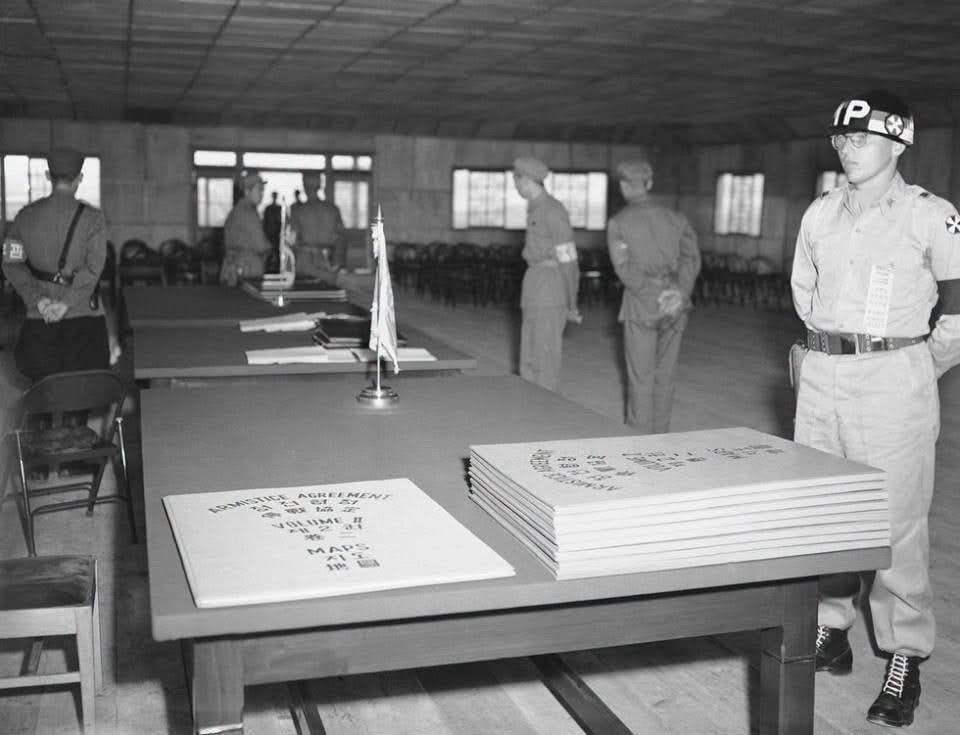
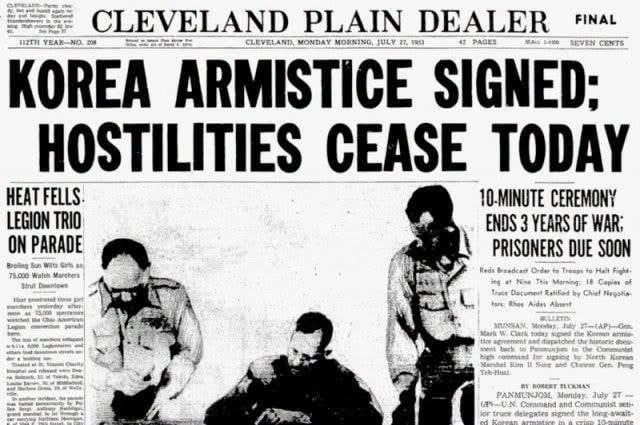
TODAY IS THE 73RD ANNIVERSARY OF THE KOREAN WAR ARMISTICE AGREEMENT- July 27, 1953
Today is the 73rd anniversary of the signing of the Korean War Armistice Agreement that put into effect a ceasefire to 3 year long Korean War. The ceasefire did not end the war since it was not a peace treaty. So, essentially, North and South Korea are still technically at war.
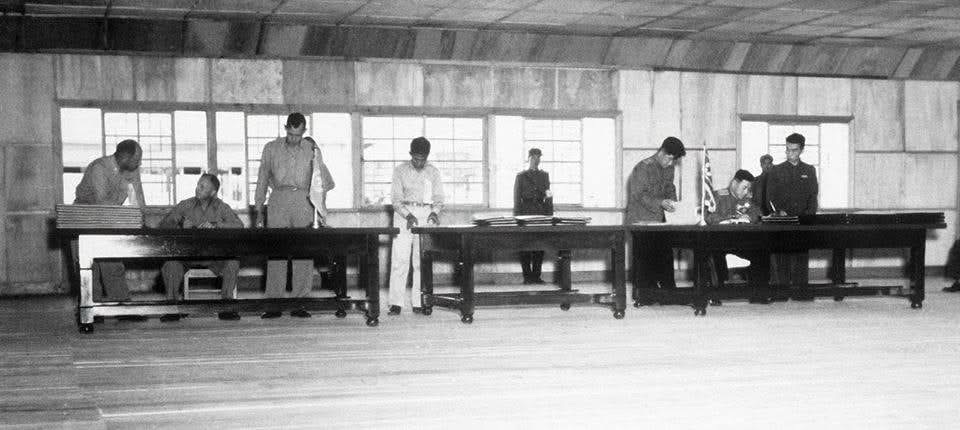
The Korean War Armistice Agreement was signed at 10 AM on the morning of July 27, 1953 at Panmunjom in Korea. But the ceasefire would not go into effect until 10 PM of July 27, 1953. This meant that fierce fighting would continue on the front lines for 12 more hours.
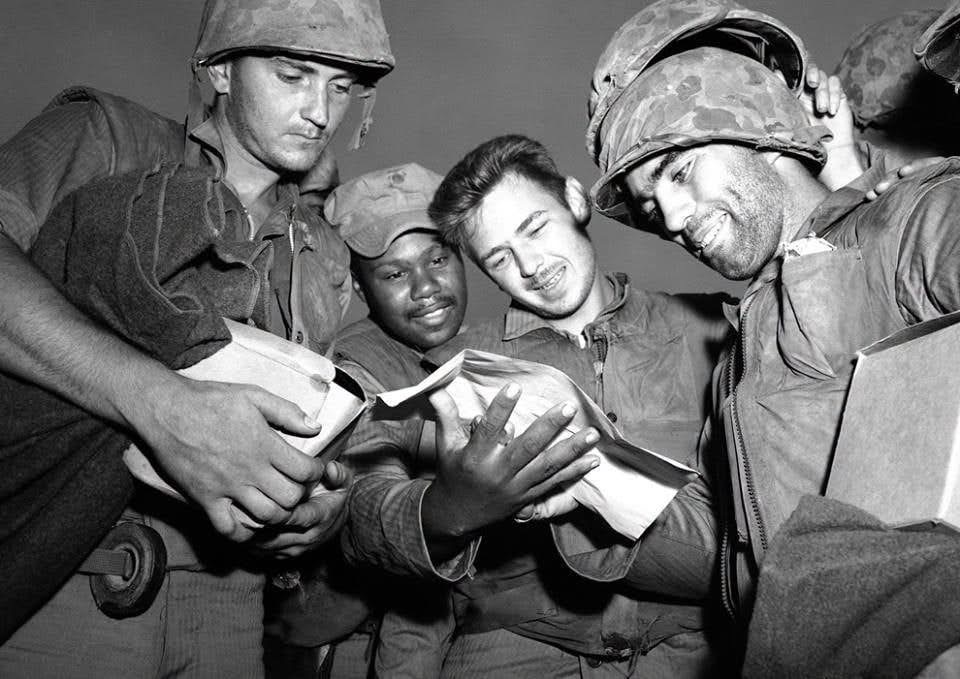
I interviewed many Korean War veterans who were on the front lines on that fateful last day of the Korean War. They recall that it was like no other day. Everything that could be fired was fired by both sides and there was tremendous amounts of artillery and mortars fired throughout the day and into the night. They recall that the night sky was lit up as bright as daylight. A Korean War veteran, told me, everything was being fired and “All hell broke loose!”
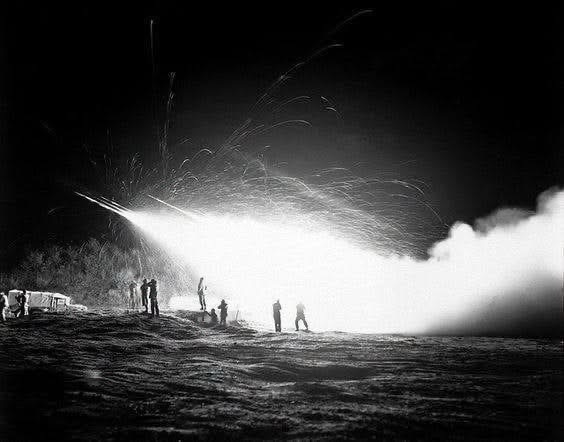
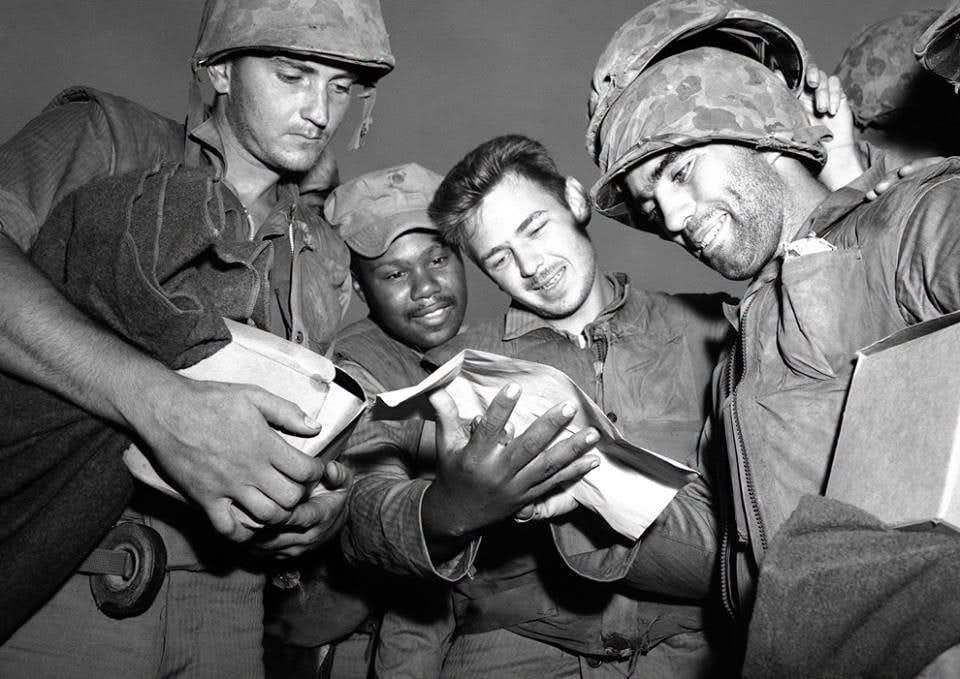
I also asked many veterans, what it was like right after 10 PM on July 27, 1953, when the ceasefire went into effect. They told me there was an abrupt and eerie silence.
Since the Armistice Agreement was not a peace treaty and merely a ceasefire, the Korean War technically never ended. The Korean War veterans described that for many days, weeks, and months following the ceasefire, there was a constant uneasiness and full state of alert. There was a sense that North Korea could start the war all over again. This feeling still exists today.
The Korean War started on June 25, 1950 and the ceasefire went into effect on July 23, 1953. There was an enormous sacrifice of lives to save South Korea. For the United States, over 36,000 Americans were killed and 8,000 still missing from the Korean War. America and 20 other United Nations sent troops and medical aid during the Korean War.
South Korea is the only country in world history, for which 21 countries came to defend and save. I believe that it was by God’s grace and by the great courage and sacrifice of all who served, that South Korea was saved.
All that South Korea has become is possible because of the sacrifices of all who served in the Korean War.
May God always bless all of our Korean War veterans, families of killed and missing in action, Korea Defense Veterans, and all active duty service members still serving in Korea today.
Millions of Koreans like me, living in freedom is the greatest legacy of all who served, and sacrificed to defend South Korea. Many generations of Koreans will live in freedom because of these heroes. We, Koreans are forever grateful to have been saved from the grips of North Korea’s communist regime.
I sincerely hope that Korea and all Koreans around the world, will never forget these great heroes and greatest defenders of our freedoms.
South Korea has risen from the ashes of war and continues to prosper in freedom and economic success as a testament and legacy of all who sacrificed to save South Korea and its people from communism.
Let us always honor and remember these heroes who made all this possible for South Korea and its people.
With everlasting gratitude, love, and respect to all who served and sacrificed their lives in the Korean War to save my family and the people of South Korea, Susan Kee – Honoring Korean War Veterans
BACKGROUND ON THE KOREAN WAR ARMISTICE AGREEMENT:
(excerpt from wikipedia)
“The Korean Armistice Agreement was signed by U.S. Army Lieutenant General William Harrison, Jr. representing the United Nations Command (UNC), North Korean General Nam Il representing the Korean People’s Army, and the Chinese People’s Volunteer Army.The armistice was signed on July 27, 1953, and was designed to “insure a complete cessation of hostilities and of all acts of armed force in Korea until a final peaceful settlement is achieved. No “final peaceful settlement” has been achieved yet. The signed armistice established the Korean Demilitarized Zone (de facto a new border between the two nations), put into force a cease-fire, and finalized repatriation of prisoners of war. The Demilitarized Zone runs not far from the 38th parallel, which separated North and South Korea before the war.
The signed armistice established a “complete cessation of all hostilities in Korea by all armed force” that was to be enforced by the commanders of both sides. Essentially a complete cease-fire was put into force. The armistice is however only a cease-fire between military forces, rather than an agreement between governments. No peace treaty was signed which means that the Korean War has not officially ended.
The armistice also established the Korean Demilitarized Zone (DMZ). The DMZ was decided to be a 2.5-mile (4.0 km)-wide fortified buffer zone between the two Korean nations. The Demilitarized Zone follows the Kansas Line where the two sides actually confronted each other at the time of the signed armistice. The DMZ is currently the most heavily defended national border in the world.” (source: wikipedia)
Ear Piercing

What was your experience.. let me hear..
What’s a song lyric that has stuck with you forever?
There comes a time when we head a certain call when the world must come together as one….
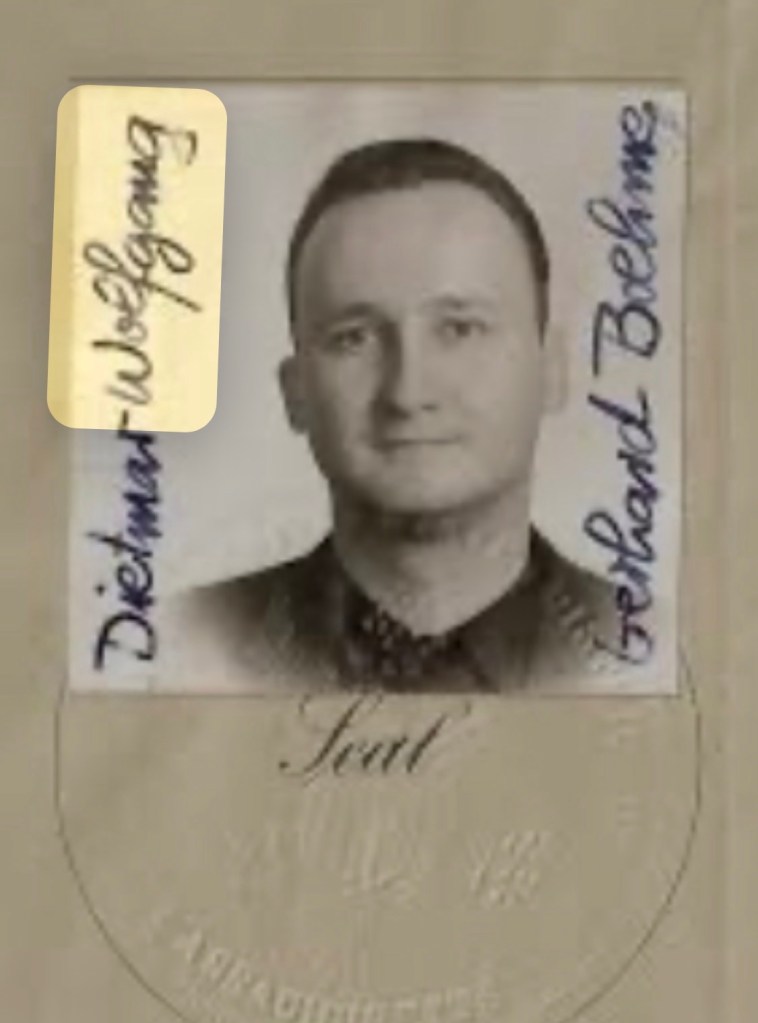
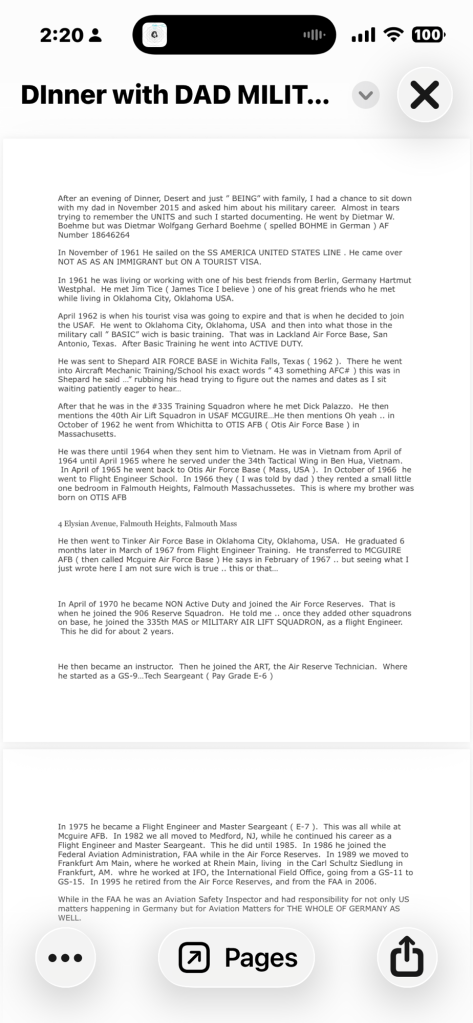
Wolfgang “ Wolfie “ Boehme
Berlin.. not East or West
Researching the city of Berlin and my family history. I learned something new this morning….
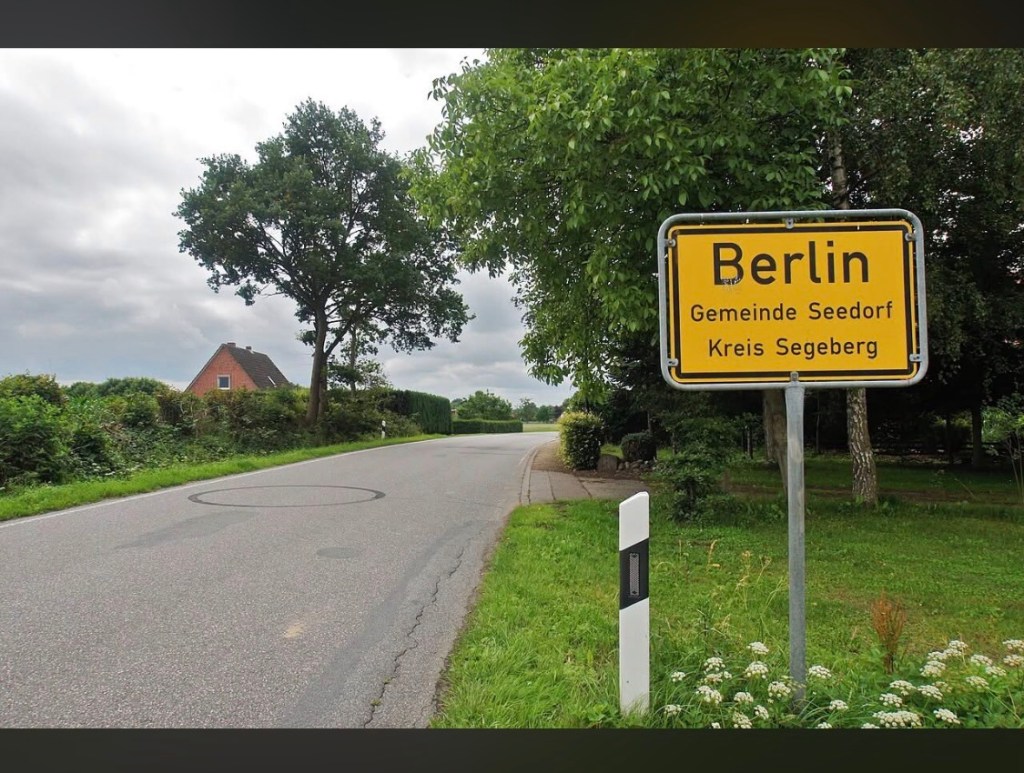
No, we’re not talking about East and West Berlin! That’s past history. Germany’s other Berlin is in fact older than the German capital city. The Schleswig-Holstein former village of Berlin (pop. 600) was first documented in 1215, making it older than the much larger and better-known Berlin, whose name was first recorded in 1244, seven years after that of its sister town, Cölln, on the opposite side of the Spree River. The two towns formed Cölln-Berlin in 1432, before later merging under the Berlin name.
There are seven communities in Germany named Seedorf (“lake village”), but the Seedorf in Kreis Segeberg, Schleswig-Holstein is where we find the former village of Berlin. Today Berlin is the second-largest district in the municipality of Seedorf, after Schlamersdorf. Known as Seedörp in the local dialect, Seedorf has a population of 2,186 (2024).
The “Klein Berlin” (Little Berlin) has several streets named after well-known streets and avenues in “Big Berlin”. These include the main thoroughfare called “Unter den Linden”, as well as others named “Kurfürstendamm”, “Potsdamer Platz”, “Potsdamer Straße”, “Lichterfelde” and “Heerstraße”. A stone marker (Berliner Kilometerstein) at Potsdamer Platz displays the distance to the German capital city, 357 km (222 mi) to the south.
The area around Berlin and Seedorf is a scenic landscape making up part of the Holsteinische Schweiz (Holstein Switzerland) nature reserve. There are campgrounds and tourist accommodations that attract visitors mostly in the summer months. Many are also drawn by the unusual Berlin name and the local Seedorfer See (Lake Seedorf).


You must be logged in to post a comment.