Researching the city of Berlin and my family history. I learned something new this morning….
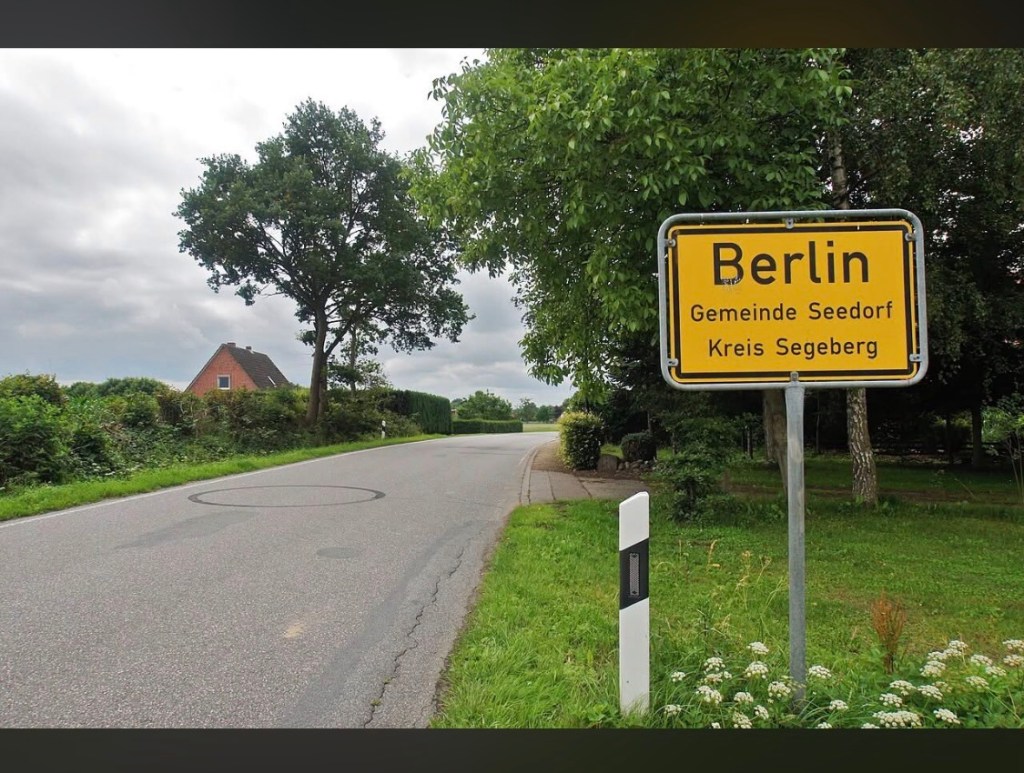
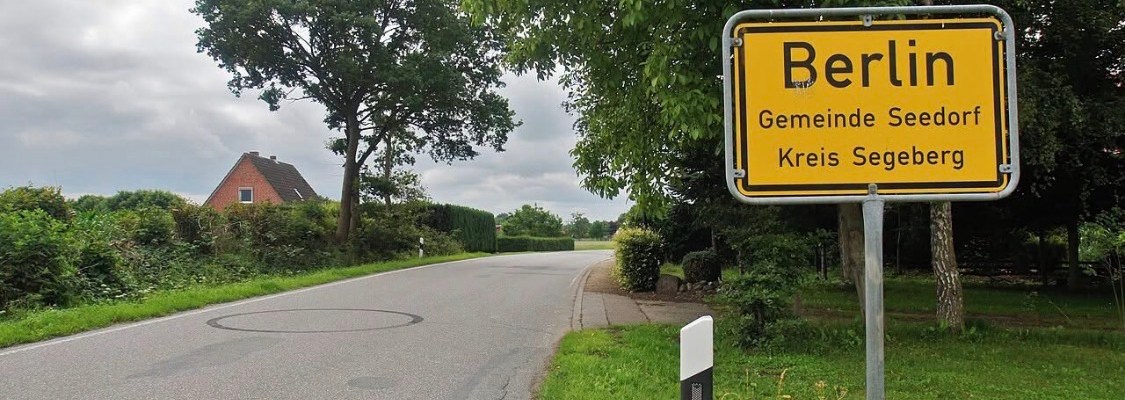
No, we’re not talking about East and West Berlin! That’s past history. Germany’s other Berlin is in fact older than the German capital city. The Schleswig-Holstein former village of Berlin (pop. 600) was first documented in 1215, making it older than the much larger and better-known Berlin, whose name was first recorded in 1244, seven years after that of its sister town, Cölln, on the opposite side of the Spree River. The two towns formed Cölln-Berlin in 1432, before later merging under the Berlin name.
There are seven communities in Germany named Seedorf (“lake village”), but the Seedorf in Kreis Segeberg, Schleswig-Holstein is where we find the former village of Berlin. Today Berlin is the second-largest district in the municipality of Seedorf, after Schlamersdorf. Known as Seedörp in the local dialect, Seedorf has a population of 2,186 (2024).
The “Klein Berlin” (Little Berlin) has several streets named after well-known streets and avenues in “Big Berlin”. These include the main thoroughfare called “Unter den Linden”, as well as others named “Kurfürstendamm”, “Potsdamer Platz”, “Potsdamer Straße”, “Lichterfelde” and “Heerstraße”. A stone marker (Berliner Kilometerstein) at Potsdamer Platz displays the distance to the German capital city, 357 km (222 mi) to the south.
The area around Berlin and Seedorf is a scenic landscape making up part of the Holsteinische Schweiz (Holstein Switzerland) nature reserve. There are campgrounds and tourist accommodations that attract visitors mostly in the summer months. Many are also drawn by the unusual Berlin name and the local Seedorfer See (Lake Seedorf).

